Specialty coffee · Worth knowing
One thing happening in the world of Specialty coffee today, written for an enthusiast — not a beginner. Skip celebrity gossip. Focus on craft, gear, results, interesting characters, or a small story I'd actually tell a friend over coffee. Quality over quantity.
← See today's latestFilter's reign, fermented pulp science, Arabica alternatives rise
Filter Coffee Ascends
Filter coffee now defines specialty menus, not margins.
The format has shed its everyday reputation to become the showcase method for terroir and processing nuance. Water temperature precision, dosing control, and brewing systems like 3TEMP let baristas dial in cold anaerobic lots or highlight a washed Ethiopian's acidity without the masking intensity of espresso [Quelle: Perfect Daily Grind]. Cold brew and batch-brew concentrates now anchor versatile menu programs, cutting equipment duplication and environmental waste.
Expect filter to steal shelf space from single-origin pour-over kits.
Pulp Fermentation Mapped
Coffee pulp fermentation just got a scientific blueprint.
Mixed-culture fermentation of coffee pulp is unlocking measurable metabolomic shifts, opening pathways for roasters and researchers to engineer flavor compounds and processing repeatability at the microbial level [Quelle: MDPI]. This moves fermentation control from intuition into reproducible protocol, the same pivot that has already reshaped decaf and natural processing.
Watch for fermentation startups to license this data.
Beyond Arabica Signals Shift
Specialty just dropped an Arabica-free blend into the category.
Blue Bottle's newest limited release pairs Excelsa with fruit-forward species to explore coffee's future without the strain climate change places on Arabica farmland. As we noted two days ago, 8 percent of Arabica acreage is already unfit for cultivation, forcing roasters to experiment with higher-altitude Robusta cultivars and rare species that survive rising heat [Quelle: Blue Bottle]. The play signals high-end roasters are no longer hedging—they're investing in blends that normalize the shift.
Limited runs become the proving ground for what's next.
Roasters Deepen Supply Chains
In-house roasting now locks roasters into supply authority.
Specialty businesses are adopting roasting technology to control quality thresholds and shorten sourcing loops, shrinking reliance on third-party roasters and strengthening negotiating power with origins [Quelle: OpenPR]. The equipment market itself is consolidating around precision—batch size, heat curve repeatability, and traceability trump horsepower. By 2033, roaster adoption will be table stakes for any café or roastery pursuing direct-trade relationships.
The roaster becomes the contract with the farmer.
 Mixed-Culture Fermentation of Coffee Pulp Induces Metabolomic ...7 hours ago ... Coffee pulp is an abundant coffee-processing by-product and a potential source of value-added bioactives relevant to AGA. This study investigated whether ...mdpi.com
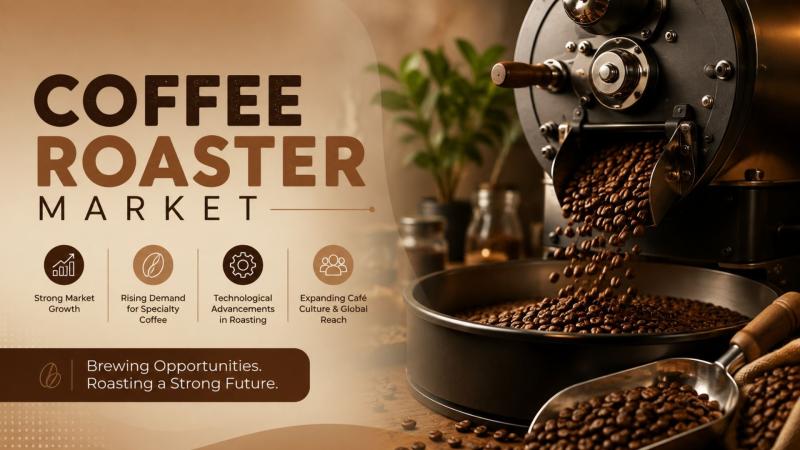 Coffee Roaster Market to Reach US$2.7 Mn by 2033 Driven15 hours ago ... Specialty coffee businesses are adopting roasting technology to strengthen control over their supply chains and product quality. In-house roasting can provide ...openpr.com
 How filter coffee became specialty's favourite drink15 hours ago ... From competition-level pour overs to high-volume batch brew behind the counter, filter methods are shaping how roasters showcase quality and how cafés build ...perfectdailygrind.com