Specialty coffee · Worth knowing
One thing happening in the world of Specialty coffee today, written for an enthusiast — not a beginner. Skip celebrity gossip. Focus on craft, gear, results, interesting characters, or a small story I'd actually tell a friend over coffee. Quality over quantity.
← See today's latestIndia's hybrid processing gains weight; Cameroon's traceability edge
Ratnagiri hybrid processing
India just proved hybrid processing can score world-class.
Subko's Project Pearl microlot from Ratnagiri Estate stacks natural and anaerobic honey fermentation into a single lot, landing SCA 85+ with raw mango, blossom honey, and hazelnut notes [Quelle: Subko Coffee]. The natural phase concentrates fruit sugars by drying whole cherries; the anaerobic honey phase locks in tropical complexity through sealed fermentation with mucilage attached, roasted medium (Agtron 65) at 1540 MASL. Ratnagiri's experimental stacking shows that processing innovation—built on fermentation science we've tracked—is now producing results, not just noise.
Watch Indian roasters capture the roaster's palate next.
Cameroon green supply chain
Traceability just became a commodity advantage.
Noumedem Global Trade's high-altitude Cameroon Arabica consistently scores 82–85 SCA with dark chocolate, herbal, and crisp citrus notes, shipped with advanced moisture-barrier liners and desiccants to lock in organoleptic profiles [Quelle: Noumedem Global]. Direct farm partnerships in Melong and the Western Highlands enable uniform grading for bulk procurement; centralized washing and hulling infrastructure ensures consistency that smaller origins struggle to match. EUDR compliance and controlled solar drying eliminate smoke contamination—practical realities that roasters once had to engineer around.
The next roaster advantage isn't taste; it's supply-chain clarity.
Single-origin and roast-to-order
Roasting to order just became the freshness standard.
Grenade Coffee sources nine distinct origins—Ethiopia, Kenya, Colombia, Guatemala, Nicaragua, Peru, Costa Rica, Sumatra, Brazil—each processed for terroir specificity and roasted in small batches at its Temecula facility without warehousing [Quelle: Grenade Coffee]. Flavor clarity as the cup cools, roast-on dating, bean surface clarity—these are the markers that separate single-origin transparency from blends designed to mask inconsistency. Light roasts retain complex acids; dark roasts build body. The choice is visible in the cup.
Freshness and traceability are no longer luxury—they're the baseline.
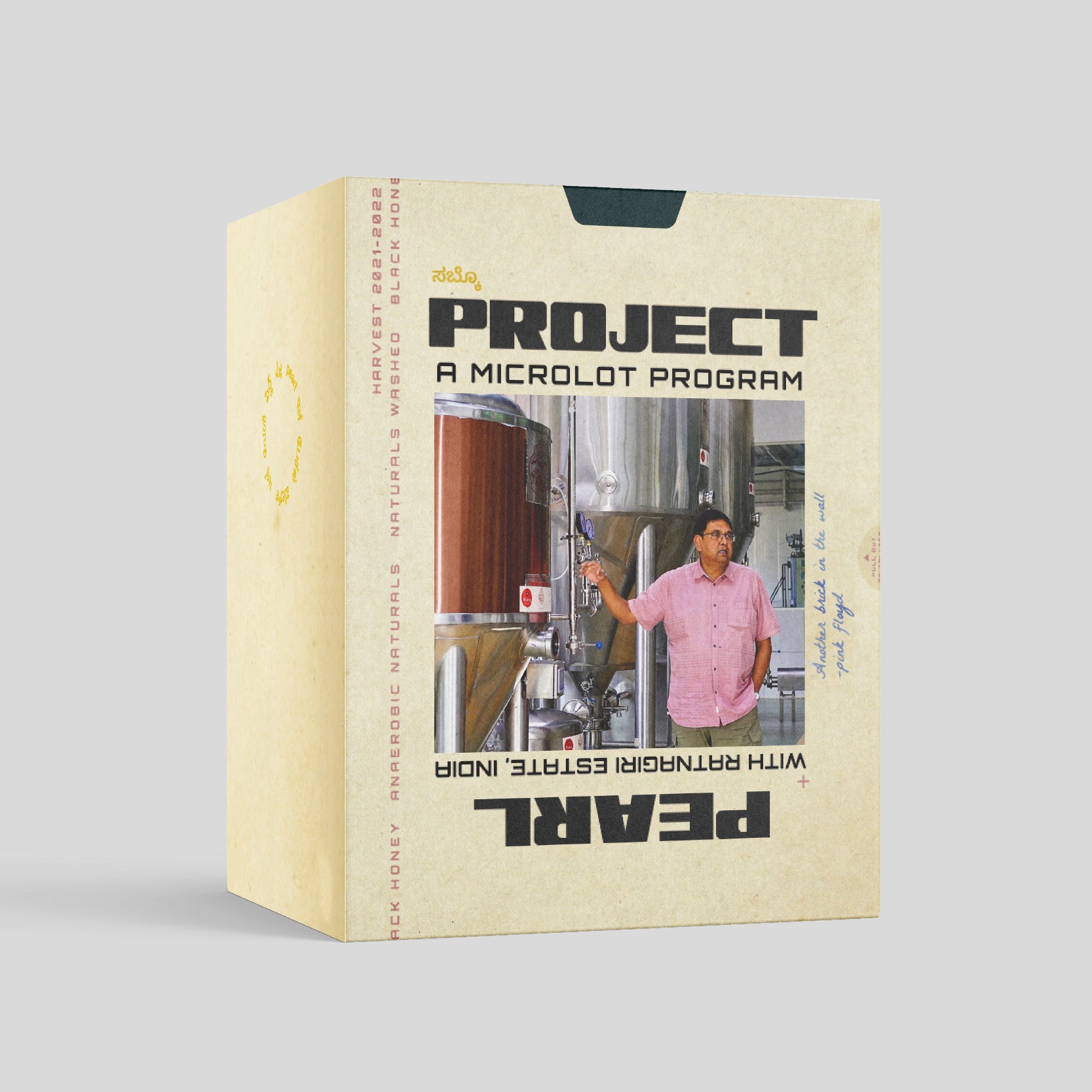 Project Pearl, Ratnagiri Estate, Karnataka (SCA 85+): Naturals + Anaer9 hours ago ... However, this coffee can be ground and enjoyed with any brew method that you desire. ... SUBKO SPECIALTY COFFEE ROASTERS & CRAFT BAKEHOUSE. From the Subcontinent, ...subko.coffee
 Premium High-Altitude Green Coffee Bulk - Noumedem Global Trade9 hours ago ... Within this global search for quality, Cameroon's unique geography has emerged as a premium sourcing hub. Featuring jagged volcanic peaks that reach far past ...noumedemglobaltrade.com
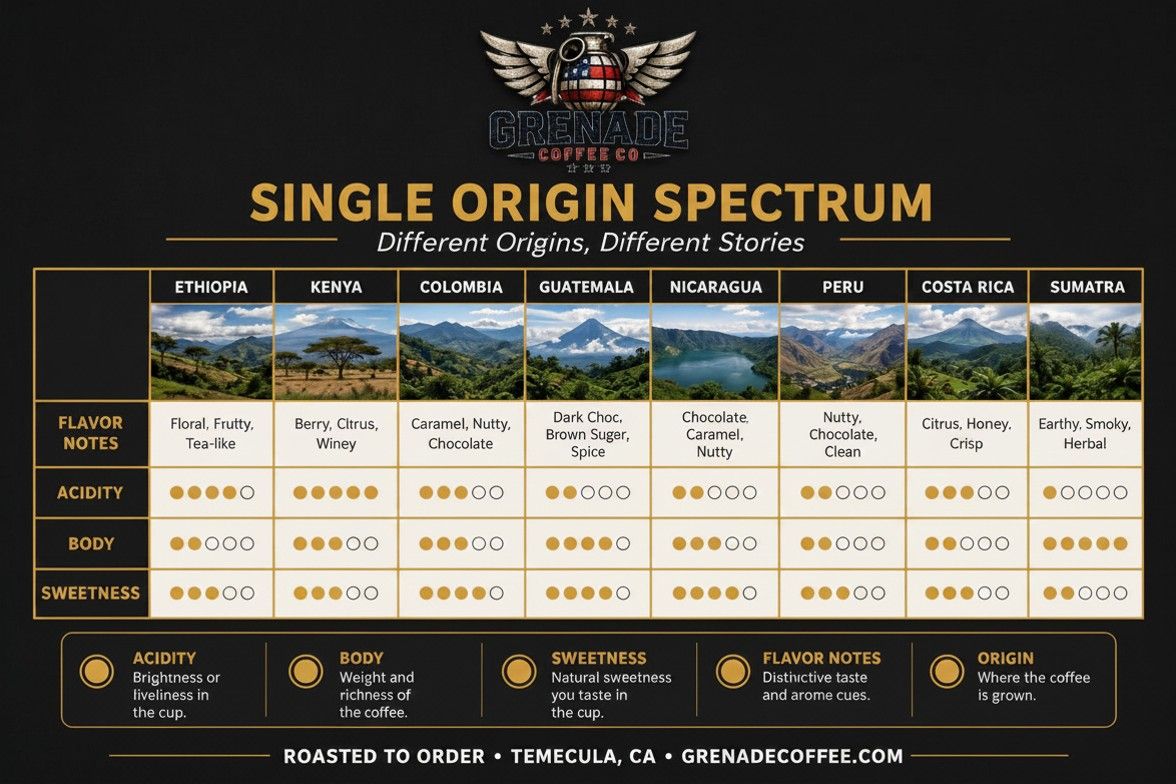 Single Origin Coffee Guide: Seed to Cup Tactical Fuel8 hours ago ... Sweat Test: Oily beans = over-roasted to hide defects. Flavor Clarity Test: Quality coffee tastes better as it cools. Bad coffee hides behind heat. Source ...grenadecoffee.com