Signing you in...

Please wait while we verify your authentication

Article · Saturday, October 24, 2026

Agentic Coding

Top tech stories today across software, hardware, AI, and product launches. Senior engineer audience — skip rumour churn and pre-announcement leaks. Lead with shipping-now stories and what changed for builders.

By Marius BongartsTech138 editions
← See today's latest
Editions
2 / 138
Generated by AI overnight from public sources, refreshed daily.
Agentic Coding
Saturday, October 24, 2026
AI Agents - Agentic Coding

CLAUDE.md under 200 lines, folder structures for scale, Python-specific agent setup

1 min read

CLAUDE.md Best Practices

Your CLAUDE.md file has a ceiling—and it's lower than you think.

ETH Zurich and Vercel research confirms what you've probably felt: agent instruction files add over 20% context cost without improving general task success. The fix is keeping your file under 200 lines by including only what the agent can't learn from reading your code—project commands, non-standard conventions, environment quirks, and explicit "don't" rules [Source: Mac Install Guide]. Skip project summaries and standard language conventions entirely. Test new rules only after mistakes happen, not preemptively.

If you're using @AGENTS.md imports thinking they reduce cost, they don't—try path-scoped rules instead.

Production Folder Structure

Moving from weekend project to production agent means organizing your .claude/ directory properly.

A 20-person AI-native company shared their folder pattern: skills/ for single-task handlers, agents/ for longer workflows, commands/ for multi-skill operations, hooks/ for role-based access control, and rules/ for file-specific behavior [Source: LinkedIn]. They pair this with a root CLAUDE.md for repo context, INDEX.md for content discovery, and wiki/ for company knowledge. The key insight: PreToolUse hooks work as security gates to block dangerous commands before they run.

Worth auditing your current folder structure against this pattern this weekend.

Python Agent Setup

Python developers now have a dedicated Claude Code playbook.

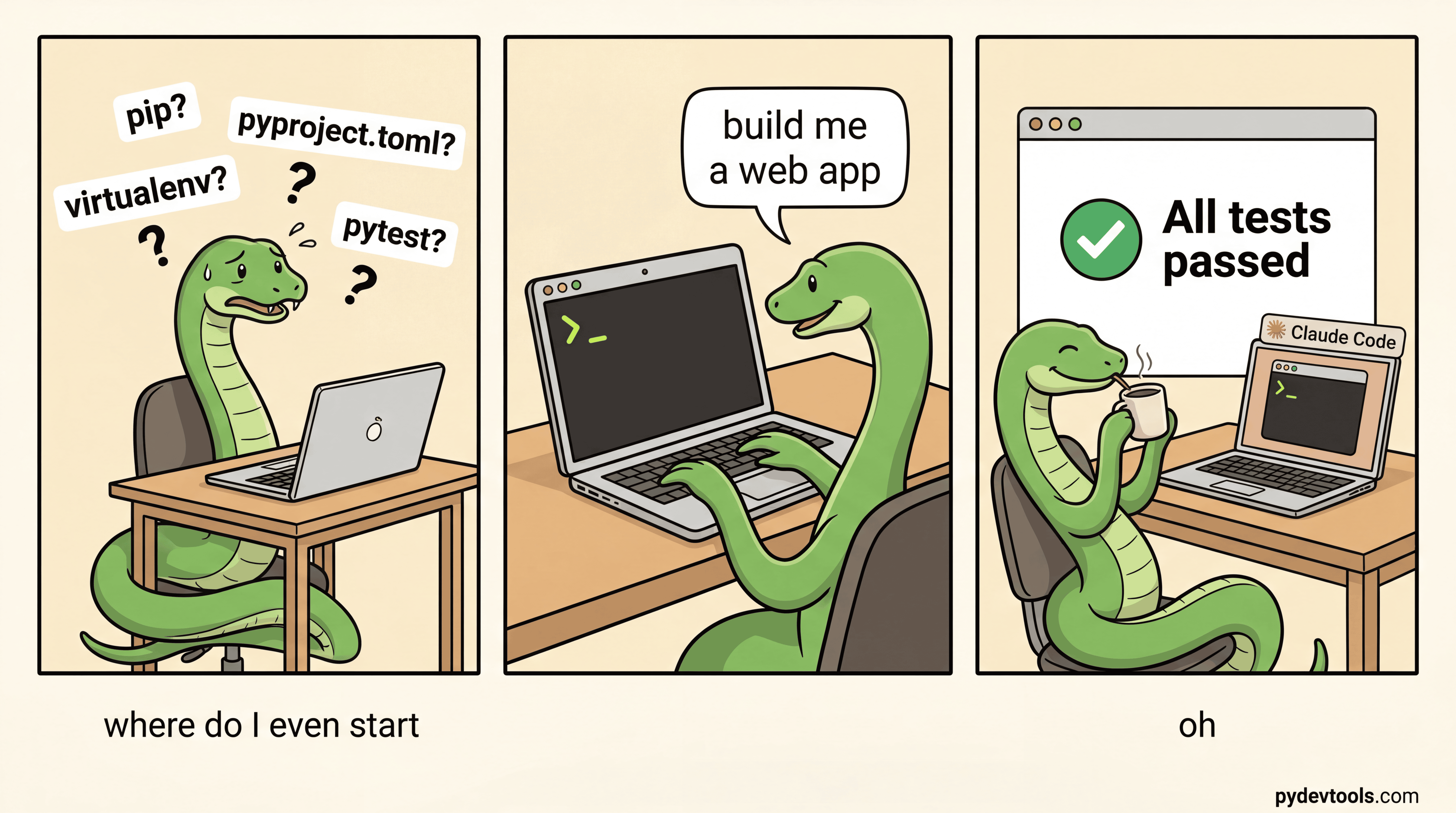
The pydevtools guide walks through configuring uv as your package manager, setting up hooks for automated testing, and structuring prompts that actually work [Source: pydevtools]. The emphasis is on concrete, goal-oriented instructions with explicit constraints rather than abstract asks. They also stress keeping sessions focused to manage token usage and context window limits—something you've likely bumped into during longer refactoring sessions.

One rule worth adopting: always review diffs before approving, since agents still hallucinate APIs and pick wrong libraries.
Sources
CLAUDE.md and AGENTS.md Best Practices - Mac Install Guide
13 hours ago ... Claude Code reads CLAUDE.md , and Codex and most other AI coding tools read AGENTS.md . A good file saves you from repeating the same instructions in every ...
mac.install.guide
AI Summary

Based on the research from ETH Zurich and Vercel, AGENTS.md files help agents handle non-standard coding practices and undocumented features but add over 20% context cost without improving general task success. Keep files under 200 lines by including only what the agent cannot learn from code: project commands, non-standard conventions, environment quirks, "don't" rules, and definitions of "done". Leave out project summaries, standard language conventions, and long documentation. Test new rules after mistakes rather than adding them preemptively, and use /init to generate a draft then remove descriptions. For Claude Code specifically, use CLAUDE.md with the single line @AGENTS.md to share instructions across tools, and move occasional instructions to subfolders, rule files, skills, or hooks to keep the main file lean and focused.

Visit source
Claude Code for Python: A Complete Guide | pydevtools
17 hours ago ... Claude Code also reads AGENTS.md when there is no CLAUDE.md , .claude/CLAUDE ... Best practicesPrompting, CLAUDE.md, and workflow patterns Docs Common ...
pydevtools.com
AI Summary

Claude Code is an agentic coding tool that reads files, runs commands, edits code, and iterates on errors based on plain English descriptions. The guide emphasizes creating a CLAUDE.md file in your project root as standing instructions that Claude Code reads at the start of every session—this should specify tools to use (like uv for Python), how to run tests, and project conventions. It also mentions that Claude Code reads AGENTS.md when no CLAUDE.md exists. For effective agentic workflows, keep instructions short and factual, include concrete project-wide commands, and use skills or subagents for reusable procedures. The guide recommends giving Claude Code specific, concrete instructions with goals and constraints rather than abstract requests, maintaining focused sessions to manage token usage and context window limits, and always reviewing diffs before approving changes since the agent can make common mistakes like choosing wrong libraries or hallucinating APIs.

Visit source
Best Practices for Agent Folder Structure - LinkedIn
1 hour ago ... 6mo. Report this post; Close menu. For the first four weeks of using Claude Code, I had no CLAUDE.md file ...
linkedin.com
AI Summary

Moving from a GenAI proof-of-concept to production-grade agentic systems requires structured organization beyond just good prompts. Key practices include: establishing a folder structure with separated workflows, guardrails, and observability modules; creating a lean CLAUDE.md file under 200 lines that documents non-obvious patterns like Zod validation and naming conventions; using path-scoped rules in .claude/rules/ to keep context windows clean; implementing PreToolUse as a security gate to block dangerous commands; and specializing subagenents with isolated permissions. A 20-person AI-native company recommends organizing the .claude/ directory with skills/ for single-task handlers, agents/ for longer workflows, commands/ for multi-skill operations, hooks/ for role-based access control, and rules/ for file-specific behavior, paired with a root CLAUDE.md that contextualizes the repo, INDEX.md for content discovery, wiki/ for company knowledge, and clients/ for client-specific information. Production AI agents also benefit from clear project structures separating agent logic, tools, models, prompts, and utilities into distinct modules rather than monolithic files, with dedicated sections for API exposure, testing, data management, and logging for maintainability and debuggability at scale.

Visit source
Compiled overnight by MorningMail.aiDelivered at 04:55 AM