Agentic Coding
Top tech stories today across software, hardware, AI, and product launches. Senior engineer audience — skip rumour churn and pre-announcement leaks. Lead with shipping-now stories and what changed for builders.
← See today's latestHooks enforce conventions, memory stays the bottleneck, subagents cut costs
Hooks vs CLAUDE.md Rules
Your project conventions finally have teeth.
Claude Code Hooks let you intercept agent actions at specific points in the execution loop—before a file write, after a shell command, mid-refactor—and enforce linting, formatting, or custom validation automatically [Source: SitePoint]. The key distinction from CLAUDE.md rules: hooks are deterministic gates that block or transform actions, while rules are suggestions the model might ignore under pressure. Use hooks for hard constraints like import ordering or security checks; keep CLAUDE.md for stylistic guidance the agent can weigh against context. The combination gives you guardrails that actually hold.
Worth wiring into your next project before the first commit.
Agent Memory Bottleneck
It's late 2026 and your agents still forget what they did yesterday.
The community consensus is settling: memory remains the core limitation in agentic workflows, not reasoning or tool use. Long-running sessions lose coherence, multi-day projects require manual re-anchoring, and context windows fill before complex tasks finish. The workarounds you've been using—modular Skills, progressive context loading, external PATTERNS.md references from the spec-driven patterns—help, but they're patches on a deeper architectural gap. Anthropic and competitors are racing on retrieval-augmented memory, but nothing production-ready has shipped.
Plan your workflows around this constraint, not against it.
Cheaper Subagents for I/O
Your expensive Claude tokens are doing grunt work they shouldn't.
An open-source plugin routes file reading, directory scanning, and other I/O-heavy tasks to cheaper subagents while reserving your main Claude Code session for reasoning and generation. The pattern builds on the multi-agent orchestration you saw with T3 Code—but focused specifically on cost optimization rather than tool unification. Early adopters report 30-40% token savings on large codebase tasks where most cycles go to understanding file structure rather than writing code.
If your Claude Code bills keep climbing, this is the lever to pull.
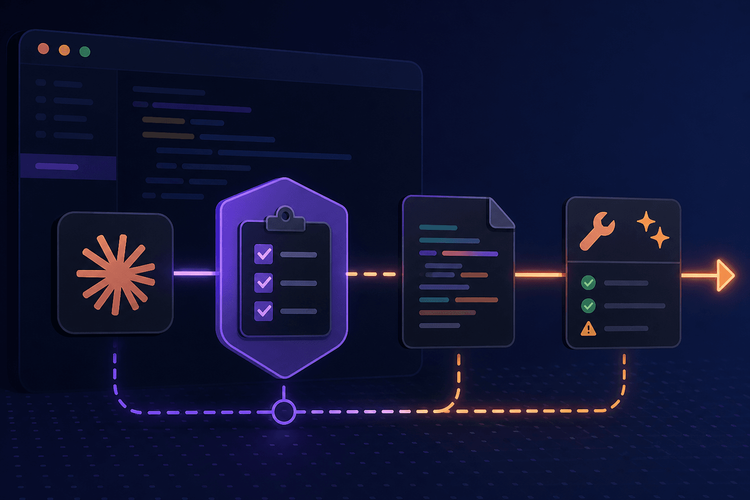 Claude Code Hooks: Build Deterministic Gates and Linting - SitePoint13 hours ago ... Hooks vs. CLAUDE.md Rules: When to Use Each; Best Practices and Pitfalls ... They fire at specific points in Claude Code's agent loop, intercepting actions before ...sitepoint.com