Agentic Coding
Top tech stories today across software, hardware, AI, and product launches. Senior engineer audience — skip rumour churn and pre-announcement leaks. Lead with shipping-now stories and what changed for builders.
← See today's latestOperator-level agent courses, Claude Code's hidden prompts, and the explore-plan-implement loop
Operator-Level Agent Course
There's now a free course for devs who want to run agents like operators, not tourists.
Andrey Markin's Agentic Coding lessons cover the unsexy stuff that actually matters: reading agent sessions properly, keeping context windows lean, writing skills that load only when needed, and wiring hooks for formatting and linting so you stop babysitting mechanical tasks [Source: Markin]. It builds progressively using Claude Code examples, with notes on Anthropic-specific features. The final modules tackle multi-phase workflows—research, planning, parallel implementation, review, QA, and PR—all end-to-end.
Pairs well with the worktree parallelism from yesterday's issue.
Claude Code Prompt Architecture
You can now see exactly what Claude Code is thinking before it thinks.
The Piebald-AI repo documents Claude Code's entire system prompt architecture—515+ prompts across subagent modes (Explore, Plan, Task), slash commands, skills, and tool definitions [Source: GitHub]. The tweakcc tool lets you patch individual prompt pieces via markdown files, then apply them to your npm or native installation while staying synced with official updates. It's a concrete reference for how Claude Code structures conditional prompts based on environment, tool availability, and session state.
Useful for writing skills that slot cleanly into the existing architecture.
Explore-Plan-Implement Loop
The pattern everyone's converging on has a name now.
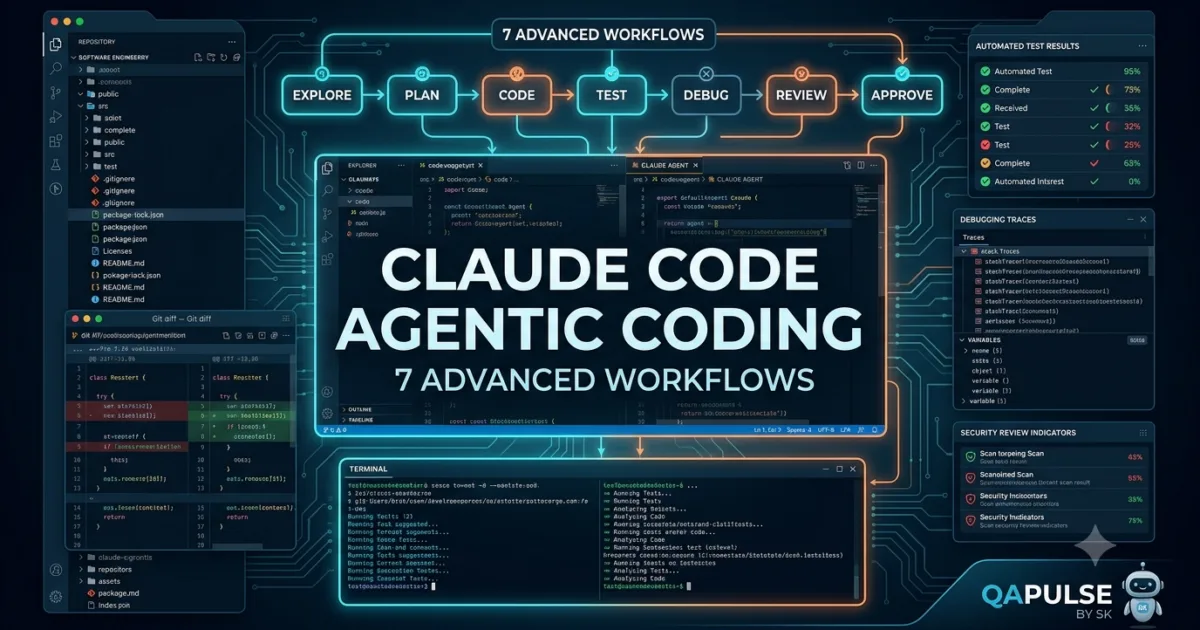
A deep-dive on Claude Code workflows breaks down the Explore → Plan → Implement → Test → Debug → Review → Approve sequence into actionable phases [Source: Skakarh]. The key insight: separate exploration from execution. Let Claude understand the codebase first, propose a strategy for your review, then iterate on tests as integrated feedback rather than a final checkbox. The real productivity gains come from delegating coordination overhead—repo searching, test generation, failure investigation—so you focus on architecture and risk.
Worth internalizing before your next complex refactor.
 Agentic Coding: Run Coding Agents Like an Operator | Andrey Markin14 hours ago ... How to actually drive coding agents at work: pick a harness, control the context window, write rules and skills that stick, wire hooks and MCP, ...andrey-markin.com
 Claude Code Agentic Coding: 7 Advanced Workflows for Better ...13 hours ago ... ... code generation, debugging, context management, and practical development workflows. Day 16 moves into a more advanced area: agentic coding workflows. The ...skakarh.com