Agentic Coding
Top tech stories today across software, hardware, AI, and product launches. Senior engineer audience — skip rumour churn and pre-announcement leaks. Lead with shipping-now stories and what changed for builders.
← See today's latestHTML beats Markdown, citation loops catch hallucinations, permission modes unlock flow
HTML replaces Markdown
Markdown might be holding you back.
Anthropic's Thariq Shihipar argues that switching to HTML for AI-assisted planning dramatically improves collaboration [Source: ChatPRD]. His workflow treats only 1% of generated tokens as production code—the rest goes into interactive HTML plans and disposable micro-apps that let you edit specific components visually. He also maintains a portable HTML design system that Claude references to keep visual consistency across projects. The shift reframes you as a compute allocator, not just a prompt writer.
Try converting your next PRD to an interactive HTML scaffold.
Self-checking research skill
Your agent can now fact-check itself.
A new Claude Code skill called Jean runs automated verification loops during research tasks [Source: Substack]. It scopes requirements first, conducts three targeted search cycles across academic databases, triangulates sources, and verifies DOIs and URLs to prevent hallucinated citations. The skill highlights open questions it couldn't resolve rather than papering over gaps. You can install and customize it for your own workflows.
Worth adding if you're tired of manually checking every source.
Permission mode cycling
Stop clicking approve on every file edit.
Claude Code's five permission modes let you match safety to your current task—Normal for production code, Auto-Accept for flow state during large refactors, Plan mode for exploration without changes, and stricter modes for CI/CD [Source: ClaudeFast]. Hit Shift+Tab to cycle through them instantly. You can also set your preferred default in settings.json so each session starts where you want it.
Auto-Accept pairs well with the well-defined implementation plans you're already building.
Matt Pocock's skills expand
Following up on the earlier coverage, the alignment drills now have company.
Matt Pocock's skills repo adds /to-prd for converting loose discussions into structured specs and /zoom-out for stepping back to system-level architecture [Source: GitHub]. The collection targets four failure modes: misalignment, verbosity, poor code quality, and architectural decay. Each skill is composable and model-agnostic, designed for real engineering rather than unreviewed vibe coding.
The /tdd skill slots nicely into your existing red-green-refactor loops.
 How I Built an AI Research Skill That Checks Its Own Citations23 hours ago ... Once installed, you just type “Jean, research [topic]” and Claude runs the workflow. ... (If you missed my beginner's guide to Claude Code, read it here). A ...evakeiffenheim.substack.com
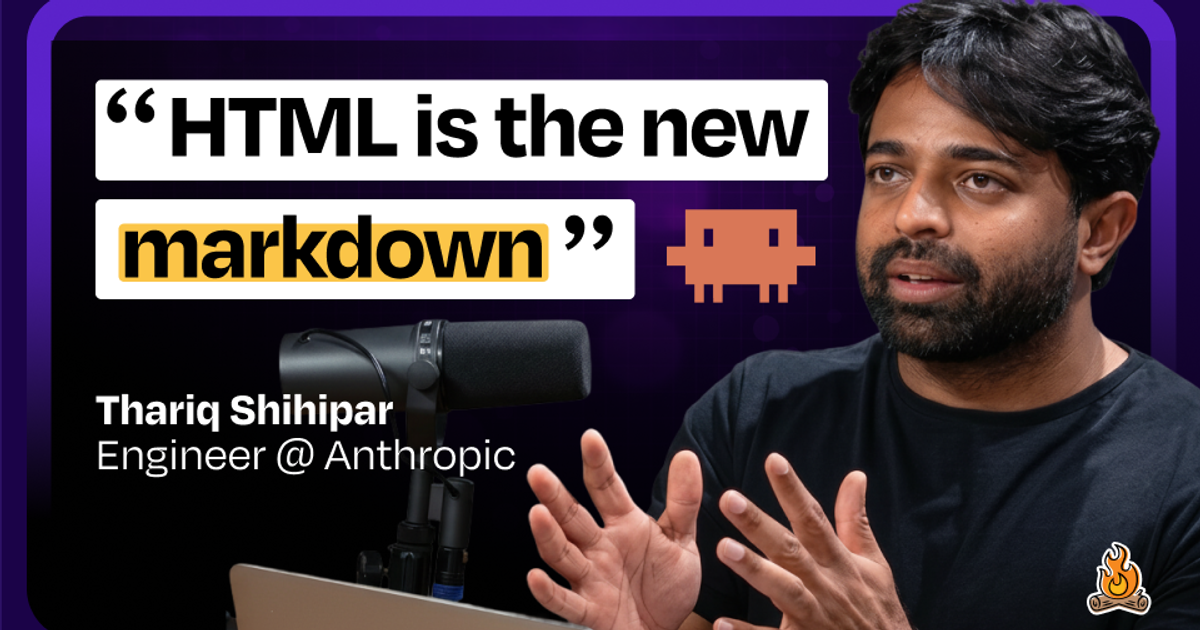 How I AI: Thariq Shihipar on Replacing Markdown with HTML for AI ...17 hours ago ... When Thariq Shihipar, an engineer on the Claude Code team at Anthropic, told me “HTML is the new markdown,” I knew I was in for a treat. We were at the Code ...chatprd.ai
 mattpocock/skills: Skills for Real Engineers. Straight from ... - GitHub13 hours ago ... General workflow tools, not code-specific. caveman — Ultra-compressed ... git-guardrails-claude-code — Set up Claude Code hooks to block dangerous git ...github.com
 Claude Code Permissions: Safe vs Fast Development Modes22 hours ago ... Claude Fast | Configure Claude Code permissions for your workflow. Learn when to use auto-accept mode and when to maintain strict controls for safety.claudefa.st