Signing you in...

Please wait while we verify your authentication

Article · Sunday, July 26, 2026

Agentic Coding

Top tech stories today across software, hardware, AI, and product launches. Senior engineer audience — skip rumour churn and pre-announcement leaks. Lead with shipping-now stories and what changed for builders.

By Marius BongartsTech61 editions
← See today's latest
Editions
8 / 61
Generated by AI overnight from public sources, refreshed daily.
Agentic Coding
Sunday, July 26, 2026
AI Agents - Agentic Coding

PRDs become executable prompts, system prompts decoded, 50 tips refreshed

1 min read

PRD as agent prompt

Your spec is now the prompt your agent runs.

Product Map shipped a PRD template in three flavors—markdown file, Claude Code skill, and hosted chat agent—built for how AI actually executes work [Source: Product Map]. The new sections cover autonomy levels per action, tool permissions with reversibility scores, failure fallbacks, and cost envelopes. The hosted variant hard-caps clarifying questions at three and marks unverified facts instead of hallucinating them. Template edits are prompt changes now, so version control and review apply.

If you're still writing PRDs for humans only, you're leaving agent leverage on the table.

Claude Code workflow refresh

Fifty tips, one principle: structure beats cleverness.

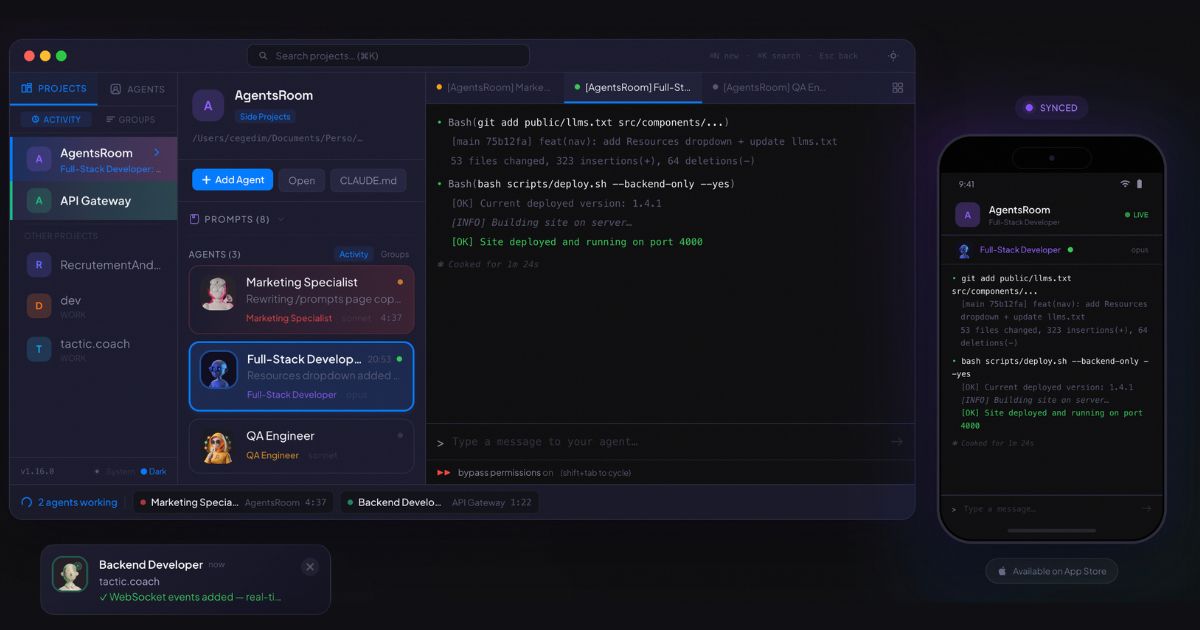
AgentsRoom's updated guide doubles down on what you've seen work—CLAUDE.md as the single highest-leverage file, chained prompts that plan before coding, and model selection matched to task weight [Source: AgentsRoom]. For multi-agent setups, the advice is assign clear roles, run QA in parallel instead of after, isolate agents to separate branches, and review before merging. Nothing revolutionary, but the checklist format makes it easy to audit your own workflow against proven patterns.

Worth a skim even if you've seen similar lists—one gap in your loop could be costing hours.

System prompt archaeology

Piebald cracked open Claude Code's internals again.

The latest extraction covers 515 system prompts across v2.1.220—up from 350 last month—with token counts, changelogs, and the full sub-agent library for Explore, Plan, and Task modes [Source: GitHub]. You'll find slash-command prompts for batch runs, code review at multiple effort levels, security scans, and the Workflow tool that orchestrates deterministic multi-agent scripts. If you're building custom skills or agents, this repo shows exactly how Anthropic structures coordination, memory, and permissions under the hood.

Reverse-engineering the default prompts is the fastest way to write better custom ones.

Agentic best-practice repo

One repo now collects the full agent playbook.

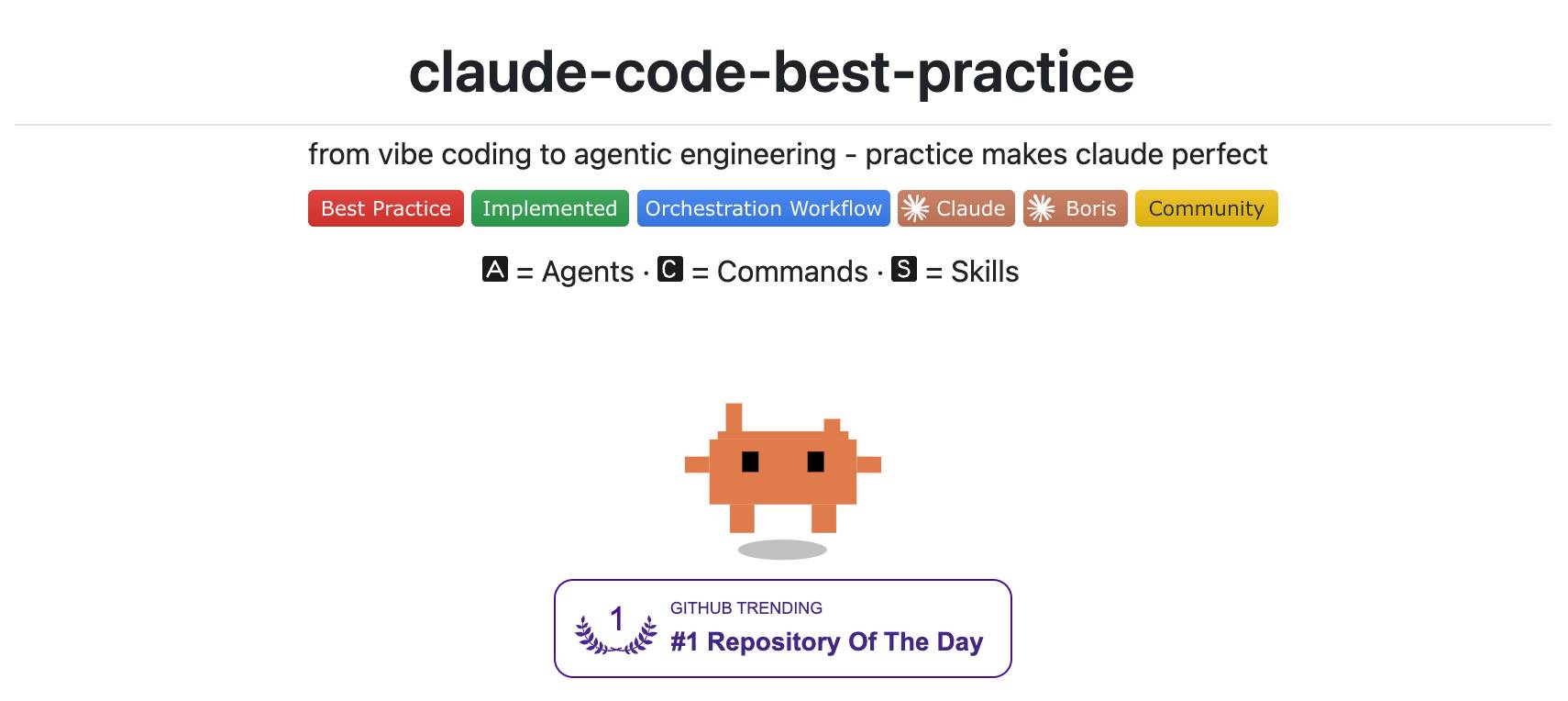
The claude-code-best-practice repo organizes PRDs, agents, commands, and skills into the directory structure Claude expects, with orchestration patterns like Command → Agent → Skill documented end-to-end [Source: GitHub]. Highlights include subagents for context isolation, /compact timing guidance before the 40% context-rot cliff, and the /weather-orchestrator as a working template. The 83-tip index covers prompting, planning, and session handling in one place.

Bookmark it alongside yesterday's skill catalogs—structure is half the battle.
Sources
50 Claude Code Tips & Tricks: Ship 10x Faster in 2025 | AgentsRoom
19 hours ago ... These tested tips and tricks cover everything from beginner prompt techniques to advanced multi-agent strategies. ... The best workflow: agents write code, humans ...
agentsroom.dev
AI Summary

Write a detailed CLAUDE.md file at your project root to serve as your AI agent's primary reference—this is the single highest-leverage action for Claude Code workflows. Include your tech stack, coding conventions, file structure, and common commands, as Claude reads it automatically on every interaction. Break complex tasks into sequential prompts rather than asking a single agent to handle everything; chain prompts so each step builds on the last, and start with asking Claude to analyze and plan before coding. Use specific output format requests, reference exact files and functions in your codebase, and specify negative constraints to prevent costly mistakes. For multi-agent workflows, assign clear specialized roles to each agent—one for API work, one for frontend, one for tests—and use an Architect agent first to create a plan that other implementation agents follow. Run QA agents in parallel with development rather than after, isolate agents to separate Git branches to avoid conflicts, and monitor progress visually rather than through terminal tabs. Keep individual Claude sessions short and focused with fresh context for each task, match model selection to task complexity (Opus for architecture, Sonnet for implementation, Haiku for quick fixes), and always review agent output before merging rather than blindly accepting AI-generated code.

Visit source
shanraisshan/claude-code-best-practice: from vibe coding to agentic ...
22 hours ago ... Boris Cherny (Creator of Claude Code) Workflow — 13 Tips · 10 Tips · 12 Tips ... Workflows · Advanced · Git / PR · Debugging · Utilities · Daily.
github.com
AI Summary

This repository provides a comprehensive guide to advanced Claude Code workflows and agentic engineering practices directly aligned with your interests. Key advanced techniques include: using PRD documents with structured agents, commands, and skills organized in `.claude/agents/`, `.claude/commands/`, and `.claude/skills/` directories; implementing subagents for context management to keep main sessions focused; using orchestration patterns like Command → Agent → Skill for complex workflows; leveraging hooks for permission management and auto-formatting; and employing test-time compute with separate context windows for parallel verification. For efficient prompt engineering, the guide emphasizes starting with minimal specs and having Claude interview you via AskUserQuestion tool before execution, breaking PRDs into vertical slices (tracer bullets) rather than horizontal phases, and using /compact strategically to manage context rot before degradation kicks in around 40% utilization. Best practices highlighted include: keeping CLAUDE.md under 200 lines with `.claude/rules/` for domain-specific instructions; using /model selection (Opus for planning, Sonnet for coding) to optimize cost and quality; maintaining small focused PRs with squash merging; using subagents for feature-specific expertise rather than generalist agents; and implementing verification skills for end-to-end testing. The repo references the /weather-orchestrator as a complete working template for the command-agent-skill pattern, and includes 83 practical tips covering prompting, planning, context management, session handling, and workflow orchestration. Videos from Boris Cherny and others demonstrate these patterns in practice.

Visit source
AI PRD template: the full structure agents can execute - Product Map
17 hours ago ... A markdown file under 09_templates/ in a Git repository. A skill Claude Code loads when a PM types "draft a spec." And a system prompt behind a chat agent on ...
productmap.io
AI Summary

Product Map's PRD template is now available in three formats—markdown file, Claude Code skill, and hosted chat agent—addressing how AI agents execute specifications differently than traditional documents. The template's classic spine (Overview, Goals, Core Concepts, Entry Points, User Flows, UI Specification, Permissions, Edge Cases, Analytics Instrumentation, Acceptance Criteria, Success Metrics) remains unchanged, but AI-specific sections were added: justification for using a model, sample inputs as evaluation seeds, autonomy levels per action, tool permissions with reversibility assessment, failure modes with designed fallbacks, cost envelopes, and rollout phases by autonomy rather than audience. Key design principles include drafting complete specs before asking clarifying questions, encoding a priority order for gap-filling (scope-defining sections first, then engineering risk, then analytics), and treating template edits as prompt changes requiring version control and review. The hosted agent variant demonstrates how discipline can be encoded into the system prompt itself—it hard-caps pre-draft questions at three, ranks clarification priorities, and marks unverified facts instead of stating them confidently, showing how template design reveals implicit decisions that transfer to any specification format.

Visit source
Piebald-AI/claude-code-system-prompts - GitHub
12 hours ago ... GitHub Advanced SecurityFind and fix vulnerabilities ... Data: GitHub Actions workflow for @claude mentions (525 tks) - GitHub Actions workflow template for ...
github.com
AI Summary

Here is relevant news from this repository that relates to your search intent: Piebald has released an agentic AI developer experience tool. The repository contains an up-to-date, comprehensively extracted list of Claude Code's system prompts across 515 prompts with token counts as of Claude Code v2.1.220, expanded from 350 prompts in June 2026. The repository tracks all Claude Code versions since v2.0.14 with a changelog documenting system prompt evolution. Key resources for advanced agentic coding include extensive agent prompts covering sub-agents (Explore, Plan), creation assistants (CLAUDE.md creation), slash commands (/batch, /code-review with multiple effort modes, /review, /security-review, /simplify), and utilities for background agents, memory consolidation, and autonomous operations. The system includes workflow orchestration capabilities through the Workflow tool supporting deterministic multi-subagent scripts, coordinator mode for delegating work to worker agents, and skills for specialized tasks like code review with multiple finder angles, design-sync integration, and PR review workflows. Documentation covers tool use patterns, memory management across sessions, permission policies, and execution safety guidelines—all designed to support efficient, advanced AI-assisted development with PRD documents and structured agent coordination.

Visit source
Compiled overnight by MorningMail.aiDelivered at 04:55 AM