Signing you in...

Please wait while we verify your authentication

Article · Friday, July 10, 2026

Agentic Coding

Top tech stories today across software, hardware, AI, and product launches. Senior engineer audience — skip rumour churn and pre-announcement leaks. Lead with shipping-now stories and what changed for builders.

By Marius BongartsTech61 editions
← See today's latest
Editions
15 / 61
Generated by AI overnight from public sources, refreshed daily.
Agentic Coding
Friday, July 10, 2026
AI Agents - Agentic Coding

NVIDIA drops 200+ skills, Claude Code prompts balloon, desktop triage goes agentic

1 min read

NVIDIA skills catalog

Your agents just got 200+ new tricks from the GPU company itself.

NVIDIA released an official skills catalog covering CUDA-X libraries, cuOpt optimization, NeMo model training, and DeepStream video analytics—all installable via a single CLI command for Claude Code and Cursor [Source: GitHub]. Each skill comes with NVIDIA-verified security signatures and continuous updates. The design philosophy is portable instruction sets that teach your agents how to navigate complex APIs without you writing custom prompts for every tool.

If you're building anything GPU-adjacent, this catalog just became your shortcut.

System prompt deep dive

The repo tracking Claude Code's internals just got more useful.

Following up on Tuesday's update, the Piebald AI extraction now includes detailed token counts for memory consolidation (859 tokens), workflow orchestration (6,988 tokens), and the Schedule command (4,303 tokens) [Source: GitHub]. You'll find dedicated prompts for dream memory, team memory handling, and background job agents that support autonomous loops with dynamic pacing. The coordinator-mode patterns for multi-subagent delegation are particularly worth studying if you're running parallel tasks.

Knowing where your context budget actually goes is how you stop wasting it.

Desktop triage workflow

Claude Code now handles the messy file decisions scripts can't make.

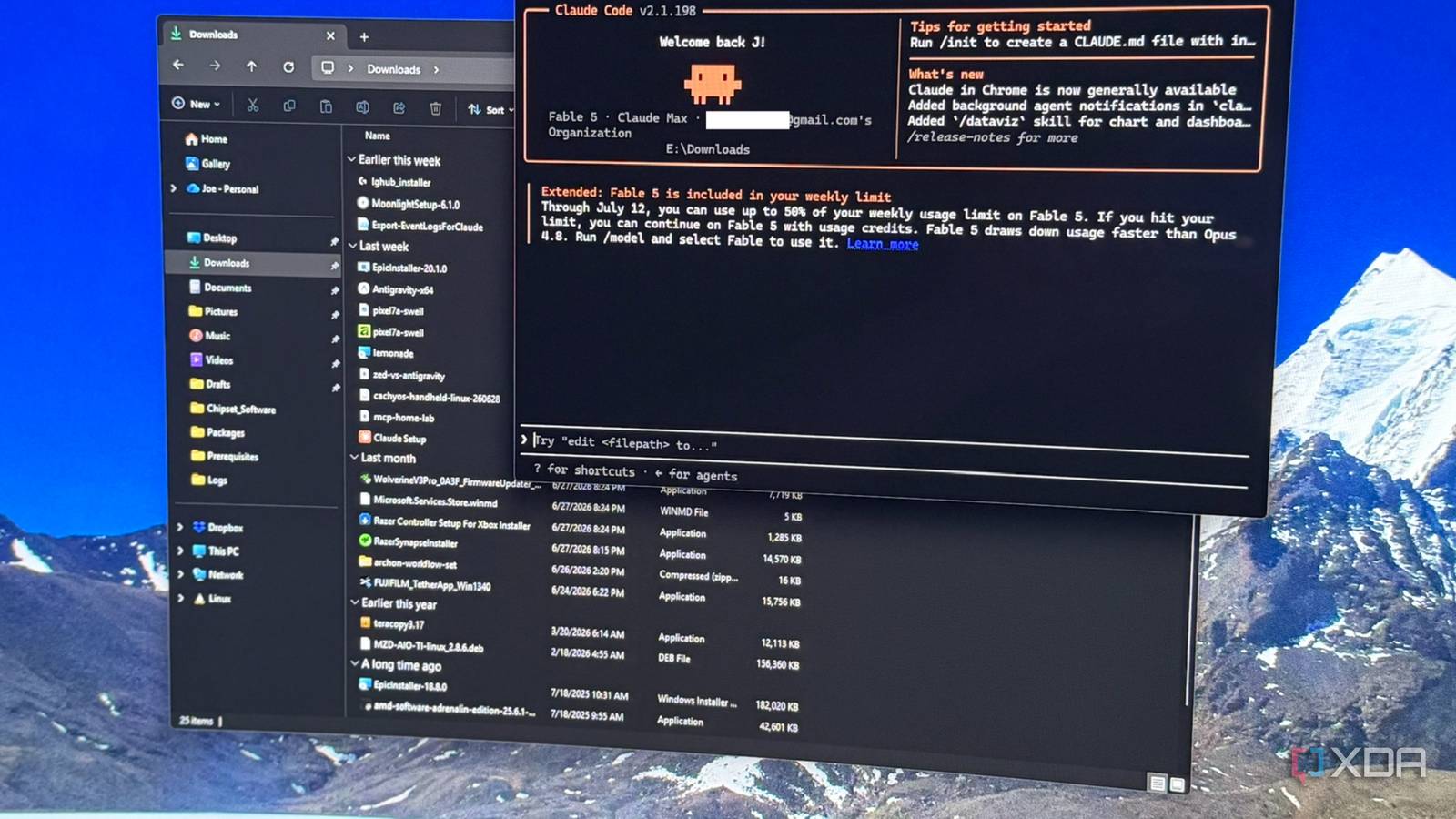
A developer documented using Claude Code to organize Downloads folders by content rather than extension, auto-rename tax receipts by extracting vendor and date from documents, audit startup services, and batch-rename screenshots based on what's actually in the image [Source: XDA]. The key pattern is dry-run proposals requiring explicit approval before execution—so the agent handles ambiguous classification tasks while you stay in control. Each workflow gets saved as a reusable Skill for ongoing automation.

Worth stealing if your local machine has become a junk drawer.

Memory architecture differences

Not all agent memory is the same—and the distinction matters for your setup.

Victor Savkin published a breakdown explaining that code-based agentic memory has fundamentally different requirements than chat-style memory [Source: X]. Understanding core attributes like persistence scope, retrieval triggers, and context windowing helps you evaluate whether a tool's memory approach actually fits your workflow. This becomes critical as you scale from single sessions to multi-agent orchestration where memory leaks between contexts cause subtle bugs.

Read it before your next tooling decision.
Sources
One week with Claude Code automating my desktop taught me ...
18 hours ago ... One week with Claude Code automating my desktop taught me more about my own workflow than years of optimization. claude code in a terminal window overlaid ...
xda-developers.com
AI Summary

Claude Code effectively handles desktop organization tasks that require judgment beyond simple scripting. The author used Claude Code to triage and classify files by content rather than just extension, creating reusable prompts saved as Skills for ongoing automation. Key workflows included organizing Downloads folders with content-aware categorization, automating daily file routing, renaming tax receipts by extracting vendor and date information from documents, auditing startup tasks and services, analyzing disk space usage to identify stale VMs and unused LLM models, and batch-renaming screenshots based on visual content with descriptive kebab-case naming. The approach emphasizes dry-run proposals requiring explicit approval before execution rather than unsupervised automation, allowing Claude to handle ambiguous classification tasks where traditional scripts fall short.

Visit source
Victor Savkin (@victorsavkin) on X
16 hours ago ... Agentic Memory: Why Code Is Fundamentally Different. Agentic memory can mean ... What you want, how you like to work, which patterns you reach for. It ...
x.com
AI Summary

Agentic memory can mean many different things, and determining what a particular product does requires understanding core attributes of memory. Victor Savkin has published an article exploring how code is fundamentally different when it comes to agentic memory, discussing key attributes that help distinguish memory implementations for AI agents.

Visit source
Piebald-AI/claude-code-system-prompts - GitHub
7 hours ago ... System Reminder: Ultracode enabled (74 tks) - Instructs the agent to optimize for exhaustive correctness and use Workflow on substantive tasks when Ultracode is ...
github.com
AI Summary

# Claude Code Workflow & Memory Optimization The repository provides an extensive extraction of Claude Code v2.1.206's system prompts and associated token counts across 515 different prompt configurations. For advanced agentic coding workflows, key resources include agent-specific prompts for Explore and Plan subagents, comprehensive /code-review frameworks with multiple effort levels and finder angles, and CLAUDE.md creation utilities for analyzing codebases. Memory management patterns are extensively documented through dream memory consolidation (859 tks), memory file attachment strategies (271 tks), and team memory handling (279 tks) that support both personal and shared knowledge bases. Productivity optimization is enabled by the Background job agent (427 tks), autonomous loop capabilities with dynamic pacing, and the Schedule slash command (4303 tks) for remote cron-triggered agents. The repository also includes Workflow tool orchestration (6988 tks) for multi-subagent coordination, skill frameworks for specialized tasks, and detailed tool descriptions for read-only investigation, fork usage, and coordinator-mode patterns that allow efficient delegation and parallel execution of complex tasks.

Visit source
NVIDIA/skills: AI agent skills published by NVIDIA - GitHub
7 hours ago ... ... optimization-api --agent claude-code. Codex. npx skills add nvidia/skills ... performance workflows. nemo-mbridge-mlm-bridge-training , nemo-mbridge ...
github.com
AI Summary

NVIDIA has released an official skills catalog for AI agents that provides portable instruction sets to teach agents how to use NVIDIA software optimally, including CUDA-X libraries and platform tools. The catalog supports Claude Code, Cursor, and other AI coding agents, with skills installable via a CLI tool (npx skills add nvidia/skills). Key features include agent-specific installation targeting, continuous skill updates, and NVIDIA-verified security signatures for each skill. The catalog covers 200+ skills across products like cuOpt for optimization, NeMo for model training, TAO Toolkit for vision AI, and DeepStream for video analytics, all designed to guide agents through complex APIs and workflows efficiently.

Visit source
Compiled overnight by MorningMail.aiDelivered at 04:55 AM