Agentic Coding
Top tech stories today across software, hardware, AI, and product launches. Senior engineer audience — skip rumour churn and pre-announcement leaks. Lead with shipping-now stories and what changed for builders.
← See today's latest110+ CLI agents cataloged, VS Code handoffs explained, and a migration playbook worth stealing
CLI Agent Directory
Someone mapped the entire CLI agent landscape so you don't have to.
The bradAGI awesome-cli-coding-agents repo now tracks 110+ terminal-native coding agents—Claude Code, Codex CLI, Aider, OpenCode, and dozens of community alternatives—plus the orchestration harnesses that run them in parallel [Source: GitHub]. You'll find context compression tools like Headroom claiming 15–20% token savings, persistent memory systems for session continuity, and the Wit tool that prevents merge conflicts between parallel agents via symbol-level locking. The directory also documents the "Ralph Loop" pattern for autonomous verification gates.
Bookmark this before your next multi-agent experiment.
VS Code Agent Handoffs
VS Code now has official docs on handing work between agents.
The new tutorial walks through three distinct harnesses: Local agents for interactive scaffolding, Plan agents for structured implementation strategies, and Copilot agents for autonomous background execution [Source: VS Code]. The pattern uses Git worktrees to prevent conflicts when running parallel tasks—the same isolation approach you've seen in the subagent context pattern from yesterday's issue. The todo app example shows streaming file generation with live preview updates.
Worth testing if you've been stitching together your own handoff workflow.
Agent Migration Case Study
Here's what a full production migration with agents actually looks like.
Andrea Bizzotto migrated 400+ pages from Publish to Astro using AI agents while maintaining 100% feature parity [Source: Code With Andrea]. The key technique: turning feature parity into testable migration contracts rather than relying on single LLM passes. He ran two agents in parallel using separate Git worktrees on a VPS with tmux, kept human oversight at critical review stages, and built a deterministic migration tool instead of trusting one-shot generation. The whole thing took two weeks part-time.
Steal this playbook for your next major refactor.
 bradAGI/awesome-cli-coding-agents - GitHub21 hours ago ... Claude Engineer ⭐ 11.2k — Community-driven CLI for agentic Claude workflows with file management and iterative development. Kimi CLI ⭐ 11.2k [Moonshot AI] — ...github.com
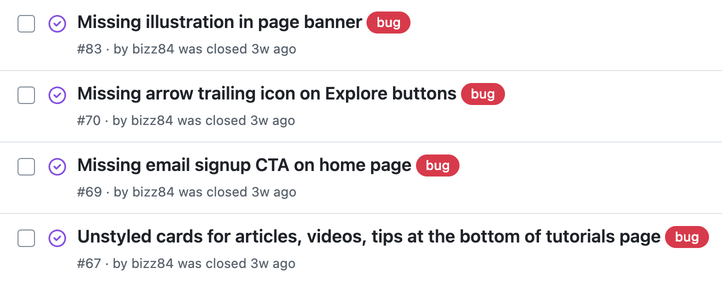 How I Used AI Agents to Migrate my Entire Site to Astro15 hours ago ... As for the workflow, I used the skills in my Agentic Coding Toolkit, plus ... Agentic Coding Toolkit. It won't replace your judgement, but it helps you ...codewithandrea.com
 Tutorial: Hand off work between agents in VS Code21 hours ago ... Visual Studio Code installed on your computer · AI features enabled in VS Code · A GitHub account (for cloud agent workflow). Step 1: Use a local agent to ...code.visualstudio.com