Du wirst angemeldet...

Bitte warte, während wir deine Anmeldung überprüfen

Artikel · Freitag, 16. Oktober 2026

Agentic Coding

Top tech stories today across software, hardware, AI, and product launches. Senior engineer audience — skip rumour churn and pre-announcement leaks. Lead with shipping-now stories and what changed for builders.

Von Marius BongartsTech135 Ausgaben
← Zur aktuellen Ausgabe
Ausgaben
7 / 135
Über Nacht von KI aus öffentlichen Quellen erstellt, täglich aktualisiert.
Agentic Coding
Freitag, 16. Oktober 2026
AI Agents - Agentic Coding

T3 Code unifies your agent zoo, NVIDIA skills drop, and the IDE showdown sharpens

2 Min. Lesezeit

T3 Code Control Surface

Your agent subscriptions finally talk to each other.

T3 Code just shipped as a unified control surface for Claude Code, Cursor, Codex, Grok Build, and half a dozen other agentic tools [Source: GitHub]. You manage all your agents from one interface across mobile, web, and desktop—no more tab-switching between Cursor Glass, Claude Desktop, and whatever else you've accumulated. The project is open-source, so you can fork it if the defaults don't fit your workflow. If you've been juggling five different agent dashboards, this is the consolidation layer you've been waiting for.

Worth testing this weekend before your next multi-tool session.

NVIDIA Agent Skills

Your Claude Code agent just learned to talk to GPUs.

NVIDIA released an official skills package that installs directly into Claude Code and Codex with workflows for CUDA, robotics, simulation, and RAG pipelines [Source: GitHub]. The skills follow the pattern you've been building with—drop them into your setup and your agent gains end-to-end Physical AI capabilities without manual wiring. If you touch any NVIDIA stack, this shortcuts weeks of integration work into a single install command.

Domain-specific skills are becoming the new moat.

IDE Comparison Update

The right tool depends on how you think, not what you build.

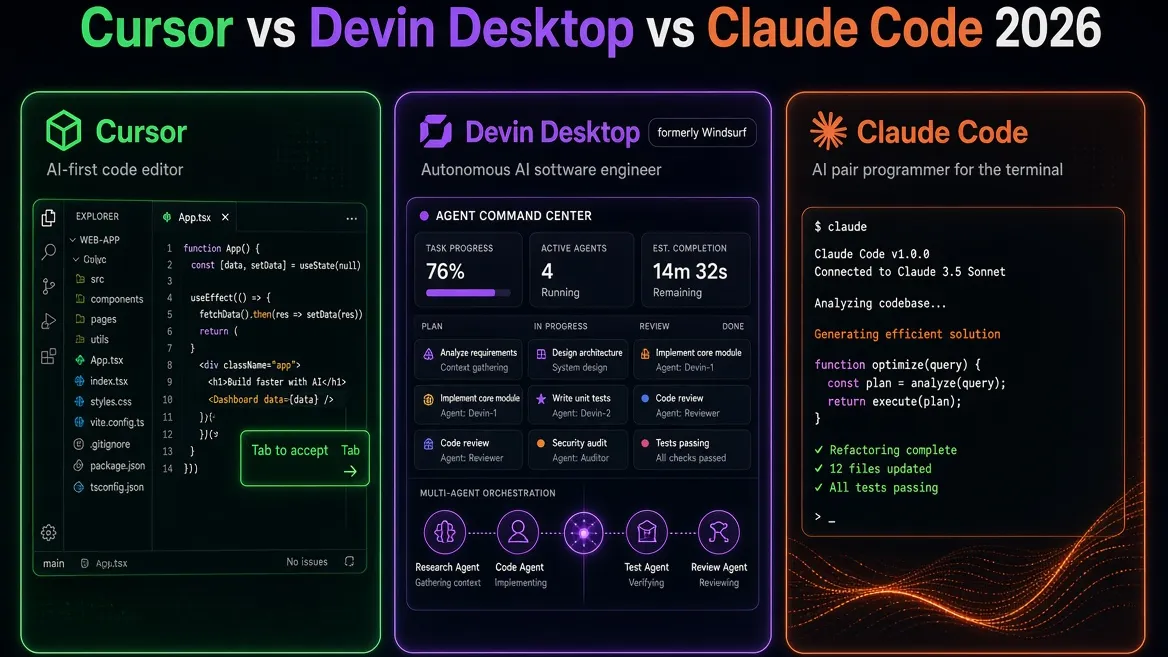
A fresh 2026 breakdown confirms what you've probably sensed: Claude Code dominates terminal-native autonomous work with deep codebase understanding, MCP servers, and headless CI/CD integration [Source: AI IDE List]. Cursor wins for fast interactive refactors via Composer and semantic indexing. Devin Desktop—formerly Windsurf—targets multi-agent orchestration through its Agent Command Center. The best practice across all three: diff-based review, sandboxed execution, and cost modeling by agent-attributed output rather than subscription price.

Run the same task in each tool on your actual codebase—that's your benchmark.

Cursor vs Copilot Tradeoffs

You might want both, not either-or.

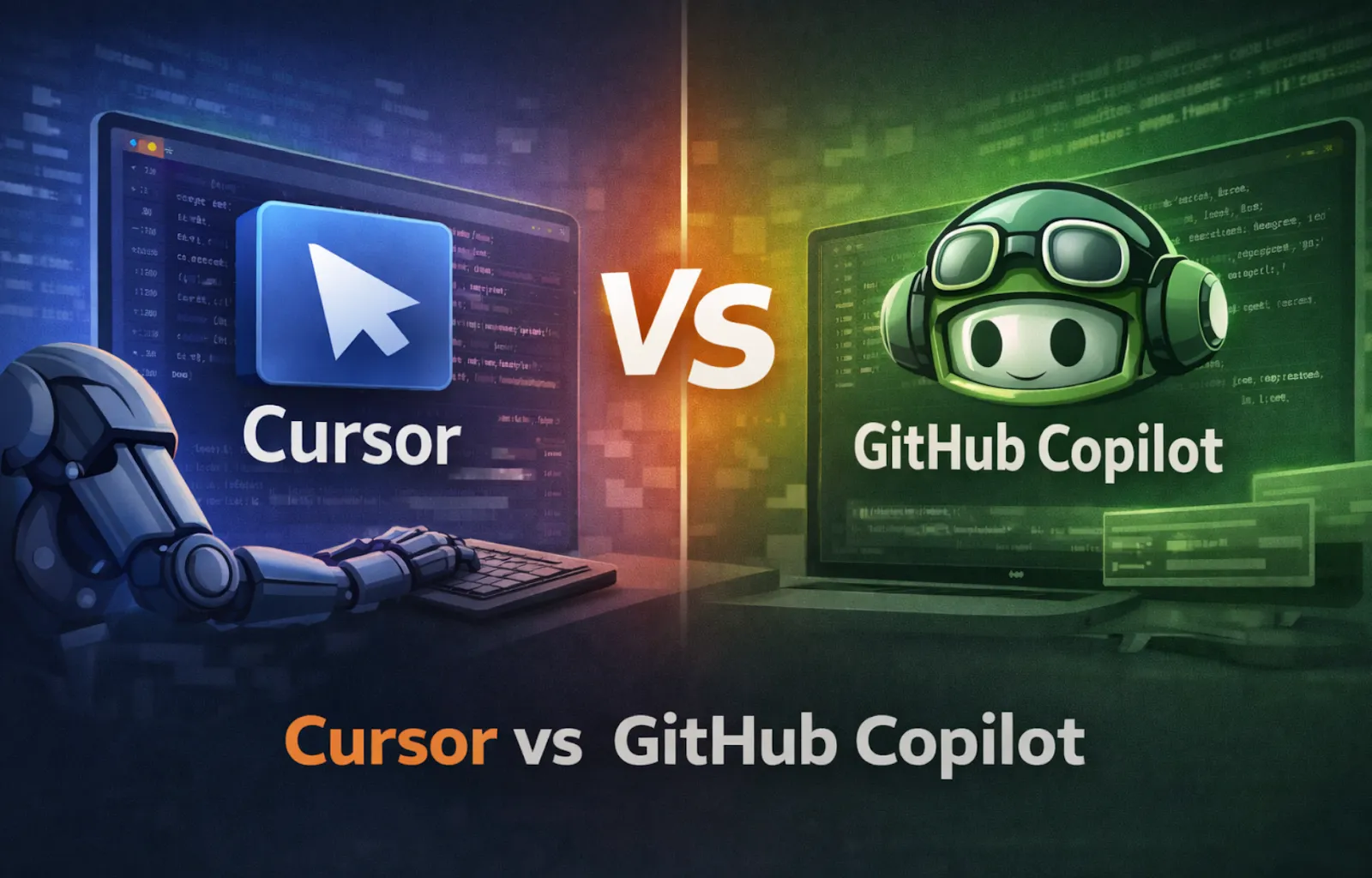
A detailed comparison shows Cursor's Composer handling complex 15+ file refactors better than Copilot's Agent mode, while Copilot's GitHub-native automation and lower price point ($10 versus $20 monthly) make it stronger for quick autocomplete and PR generation from issues [Source: TrueFoundry]. Many developers now run both: Copilot for inline completions in their primary IDE, Cursor for heavy multi-file tasks requiring deep context and autonomous iteration. Per-task model selection in Cursor—GPT-5.2, Claude Opus 4.6, Gemini 3 Pro—gives you flexibility Copilot doesn't match.

Layer your tools; don't marry them.
Quellen
Cursor vs Windsurf (Devin Desktop) vs Claude Code - AI IDE List
16 hours ago ... Hybrid approaches are common: use Cursor or Devin Desktop for interactive editing and Claude Code for overnight or CI agent runs. Advanced Tips, Edge Cases, and ...
aiidelist.com
KI-Zusammenfassung

Cursor excels at fast Tab completions and multi-file edits via Composer, making it ideal for well-scoped tasks in VS Code environments. Devin Desktop (formerly Windsurf) emphasizes multi-agent orchestration through its Agent Command Center with Cascade/Devin Local flows and cloud delegation. Claude Code leads terminal-native autonomous workflows with deep codebase understanding, sub-agents, hooks, MCP servers, and headless modes—positioned as the volume leader for long-horizon end-to-end features and CI/CD integration. For advanced agentic coding workflows, Claude Code's terminal-native design with MCP support and headless execution enables scripting and unattended runs, while Cursor's semantic indexing and Composer provide fast interactive multi-file refactors. All three tools support custom tooling via MCP servers, though pitfalls include incomplete indexing, overly broad tool permissions, and model drift. Best practices favor diff-based review, explicit approval for production changes, sandboxed execution, and cost modeling by agent-attributed output rather than headline subscription price.

Quelle öffnen
Cursor vs GitHub Copilot: Which AI Coding Tool Should You Use in ...
10 hours ago ... Coding agent — spins up a GitHub Actions VM, clones your repo, opens PRs from issues autonomously. Since February 2026, you choose between Claude, Codex, or ...
truefoundry.com
KI-Zusammenfassung

Cursor is an AI-first IDE built on a VS Code fork that excels at agentic workflows, featuring Agent mode for autonomous task completion, Composer for coordinated multi-file editing with full codebase awareness, and Background Agents for parallel autonomous work via git worktrees. It offers deep codebase indexing with semantic search, per-task model selection (GPT-5.2, Claude Opus 4.6, Claude Sonnet 4.6, Gemini 3 Pro), and strong MCP integrations with tools like Datadog and Linear. GitHub Copilot, available across six+ IDEs, provides inline completions, Agent mode for multi-step edits, and autonomous PR generation from GitHub issues, but trails Cursor in context awareness for large multi-file projects and lacks per-task model control. For solo developers and small teams optimizing agentic coding workflows, Cursor's Composer is strongest for complex refactors spanning 15+ files, while Copilot's edge lies in GitHub-native automation and lower cost ($10/mo vs $20/mo). Many developers use both: Copilot for fast autocomplete in their primary IDE, Cursor for heavy multi-file tasks requiring deep codebase context and autonomous iteration.

Quelle öffnen
GitHub - pingdotgg/t3code
10 hours ago ... Works with your subscriptions on Claude Code, Codex, Cursor, Grok Build, OpenCode, and Google Antigravity. If they're set up on your computer, T3 Code can ...
github.com
KI-Zusammenfassung

T3 Code is an agent control surface that unifies management of multiple agentic coding tools including Claude Code, Cursor, Codex, Grok Build, OpenCode, and Google Antigravity across mobile, web, and desktop platforms. The tool enables developers to control all their agent subscriptions from a single interface with cross-device support, addressing the workflow fragmentation that existing solutions like Codex desktop app, Conductor, Claude Desktop, and Cursor Glass don't fully solve. Installation is straightforward across multiple operating systems via command line, desktop app installers, or package managers, and the project emphasizes being performant, remote-ready, and open-source so users can fork and customize their development environment if needed.

Quelle öffnen
Agent Skills for NVIDIA products — install into Claude Code ... - GitHub
10 hours ago ... ... coding agents to run Physical AI, robotics, simulation, CUDA, and RAG workflows end to end. docs.nvidia.com/skills. Topics. agent-skillsagentic-aiai-agents ...
github.com
Über Nacht zusammengestellt von MorningMail.aiZugestellt um 04:55