Agentic Coding
Top tech stories today across software, hardware, AI, and product launches. Senior engineer audience — skip rumour churn and pre-announcement leaks. Lead with shipping-now stories and what changed for builders.
← Zur aktuellen AusgabeSonnet 5.5 beats Opus on agentic coding, context files may be dying, Coursera ships Claude Code fundamentals
Sonnet 5.5 vs Opus 5.5
The cheaper model wins the agentic benchmark.
Sonnet 5.5 scores 70.6% on Terminal-Bench 4.0 versus Opus 5.5's 66.4%, and costs roughly half as much [Source: Aleinikov]. The real price gap shrinks to about 1.65× when you factor in identical cache-read costs. One critical trap: the two models can't read each other's thinking blocks, so routers that switch mid-conversation silently drop reasoning history. Stick with one model per conversation—escalate by starting fresh from a summary rather than swapping.
For your bounded SaaS tasks, Sonnet 5.5 just became the default.
Context Files Obsolescence
Your CLAUDE.md and AGENTS.md files might have an expiration date.
Anthropic's Thariq Shihipar predicts context files will become obsolete as frontier models improve their reasoning and effort allocation [Source: Latent Space]. The reasoning: better models will infer project norms without explicit instruction files—Pareto dominance in reasoning eventually overconstrain agents more than freeform context helps them. Claude Mods now run directly inside Claude Code's TypeScript runtime using cached forked agents for mutable software patterns.
Worth monitoring—but keep maintaining your context files until the models actually prove they don't need them.
Claude Code 101 Course
Anthropic finally built the official onboarding path.
Claude Code 101 on Coursera covers the fundamentals you've been piecing together from docs and Discord—memory management via CLAUDE.md, subagent delegation for clean context, and the explore → plan → code → commit workflow [Source: Coursera]. It also walks through MCP server integration for custom tools, hooks for deterministic control points, and context window commands like /compact and /clear. Beginner-level framing, but the coverage on authorization frameworks and code review patterns goes deeper than the docs alone.
Useful for onboarding collaborators who haven't caught up to your workflow yet.
 Claude Code 101 | Coursera4 hours ago ... Tool Calling · Process Driven Development · Context Engineering · Context Management · Memory Management · Agentic systems · Authorization (Computing) · Generative AI ...coursera.org
 The Future of Claude Code: Mods, Mutable Software, & Multiplayer ...7 hours ago ... ... Claude Mods, and the architectural future of mutable software and multiplayer agent harnesses. The conversation explores advanced prompting techniques, the ...thepodcastsummary.com
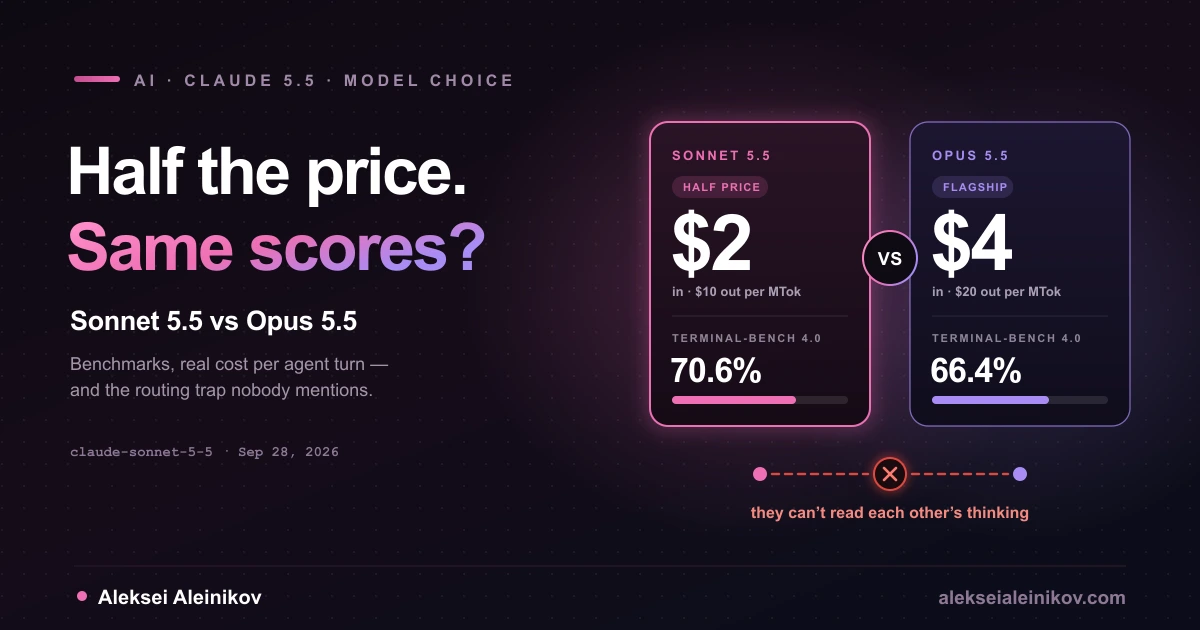 Claude Sonnet 5.5 vs Opus 5.5: Benchmarks, Cost, Traps23 hours ago ... If you A/B test them without setting output_config.effort , you are comparing Sonnet at high against Opus at medium. In Claude Code and the Claude apps, Sonnet ...alekseialeinikov.com