Du wirst angemeldet...

Bitte warte, während wir deine Anmeldung überprüfen

Artikel · Dienstag, 13. Oktober 2026

Agentic Coding

Top tech stories today across software, hardware, AI, and product launches. Senior engineer audience — skip rumour churn and pre-announcement leaks. Lead with shipping-now stories and what changed for builders.

Von Marius BongartsTech135 Ausgaben
← Zur aktuellen Ausgabe
Ausgaben
10 / 135
Über Nacht von KI aus öffentlichen Quellen erstellt, täglich aktualisiert.
Agentic Coding
Dienstag, 13. Oktober 2026
AI Agents - Agentic Coding

Gentle-AI ships benchmark-beating agent patterns, Plandek data shows quality gaps, tool comparison lands

2 Min. Lesezeit

Gentle-AI Framework

Your agent scaffolding just got a serious upgrade.

Gentle-AI dropped as an open-source framework that configures Claude Code, Cursor, and 15 other agents with production-ready patterns [Source: GitHub]. The headline feature is Engram—persistent project memory across sessions, solving the context amnesia you've been fighting with Obsidian workarounds. The framework also introduces Organic Driven Development for proportional task sizing and Receipt-Driven Development for risk-based code review. Benchmarks show a 3-line bug fix dropping from 335 seconds and $0.34 to 77 seconds and $0.11. Test-first by default, subagent delegation only when there's a concrete reason.

Worth testing against your current AGENTS.md setup.

Tool Comparison Guide

The Claude Code versus Cursor debate finally has a clear answer—it depends on your workflow.

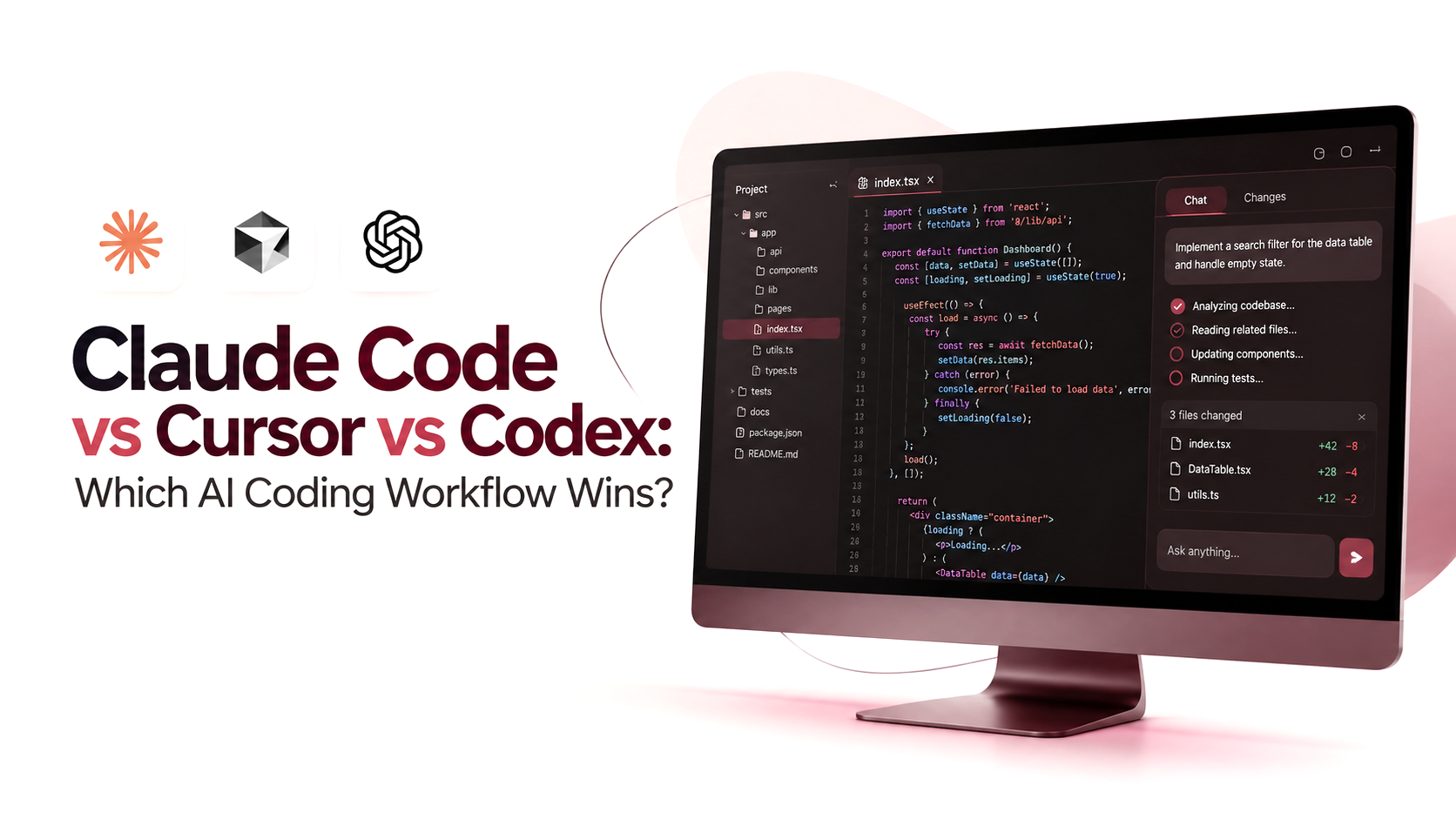
A new comparison breaks down when each tool wins [Source: ToolJunction]. Claude Code dominates terminal-based repository work with multi-file changes and scripted automation. Cursor shines for interactive, editor-first development where you want to steer and inspect frequently. Codex fits delegated, well-defined tasks you review after. The recommendation for solo devs: test each tool on the same task in your actual codebase, tracking retries, corrections, time, and cost before committing.

Your codebase is the only benchmark that matters.

Databricks Agent Skills

Databricks just gave your agents native superpowers for data work.

A new skills package installs directly into Claude Code and Cursor with slash commands for setup and diagnostics [Source: GitHub]. You get guidance on building apps, jobs, data pipelines, working with Lakebase and Model Serving, plus deployment with Declarative Automation Bundles. The plugins include hooks for prompt routing, context management, and authentication error handling. Installation runs through the Databricks CLI or plugin marketplaces.

If you touch Databricks at all, this shortcuts the setup you'd otherwise build manually.

Plandek Quality Warning

Token spend is up 13x, but quality is sliding backward.

Plandek's Q4 2026 benchmarks across 2,500 engineering teams reveal a troubling pattern [Source: DigiWorld]. The most mature agentic teams boosted throughput 50% over six months, but their Stories-to-Bugs ratio dropped 27%. Lead Time to Value improved just 4%. The teams that buck this trend share three traits: a defined transition strategy, improving foundational processes alongside AI tools, and visibility into harness and context engineering. High performers deliver four times the throughput with three times fewer defects.

Your process matters more than your model budget.
Quellen
Claude Code vs Cursor vs Codex: Which AI Coding Workflow is best ...
11 hours ago ... Claude Code, Cursor and OpenAI Codex can all help with debugging, multi-file edits, tests and feature development. But their workflows, usage limits and ...
tooljunction.io
KI-Zusammenfassung

Claude Code works best for terminal-based repository work involving multi-file changes and scripted workflows, making it ideal for debugging across related modules and automating repeatable tasks. Cursor is strongest for interactive, editor-first development where you want AI assistance integrated into everyday coding with frequent opportunities to steer and inspect changes. Codex suits delegated, well-defined tasks that can be reviewed after implementation. All three tools require careful attention to context limits, test coverage and review processes—passing tests don't guarantee correctness, and usage consumption depends on task complexity and model choice rather than subscription tier alone. For solo developers, the recommendation is to test each tool on your own codebase with the same task, recording retries, corrections, time and cost before committing to a specific workflow.

Quelle öffnen
Gentle-AI configures the AI coding agents you already use ... - GitHub
13 hours ago ... Gentle-AI configures the AI coding agents you already use: Claude Code, Cursor, OpenCode, Codex, Pi, and more. Choose persistent memory, Organic-Driven ...
github.com
KI-Zusammenfassung

Gentle-AI is an open-source framework that provides agentic coding patterns and best practices for developers working with AI agents like Claude Code and Cursor. Key features include Engram™ for maintaining project context across sessions, Organic Driven Development (ODD) for proportional task sizing and routing decisions, and Receipt-Driven Development (RDD) for risk-based code review. The framework emphasizes test-first development by default, delegates work to subagents only when there's a concrete reason (exploration, parallel writes, context backstop, or verification), and supports 17 different AI agents while remaining deterministic and measurable. Benchmarks show significant improvements over baseline approaches: a 3-line bug fix improved from 335 seconds and $0.339 to 77 seconds and $0.105, and a shared logic bug reduced from 479 seconds to 276 seconds with an explorer agent. The tool includes built-in components like a skills library, CodeGraph for symbol analysis, security deny-lists, and optional personas designed for advanced workflow guidance.

Quelle öffnen
skills and plugins for building on Databricks with Claude ... - GitHub
19 hours ago ... Build on Databricks with AI coding agents such as Claude Code, Cursor, Codex, GitHub Copilot, and many others. This repository provides the skills and agent ...
github.com
KI-Zusammenfassung

This repository provides Databricks-specific skills and plugins for AI coding agents including Claude Code and Cursor. The skills offer guidance on building apps, jobs, data pipelines, working with Lakebase and Model Serving, and deploying resources with Declarative Automation Bundles. Installation is available through the Databricks CLI (supporting both stable and experimental skills) or plugin marketplaces for Claude Code, Cursor, GitHub Copilot, and Codex. The stable skills cover core functionality like data discovery, full-stack TypeScript app development with AppKit, job orchestration, vector search for RAG, and model serving, with experimental skills available for additional use cases. Claude Code and Cursor plugins include slash commands for setup and diagnostics, plus hooks for prompt routing, context management, and authentication error handling to streamline Databricks-related workflows within these agents.

Quelle öffnen
AI coding tools fail to match productivity hopes as token spend soars ...
20 hours ago ... The benchmarks are based on quantitative data tracked using the Plandek Developer Productivity Insight platform, using the first quarter of 2025 as the pre ...
digitalisationworld.com
KI-Zusammenfassung

Plandek's Q4 2026 benchmarks of 2,500 engineering teams reveal that despite token spend surging 10-13x since January 2025, productivity gains are lagging significantly. While the most mature agentic teams increased throughput by 50% over six months, quality declined with a 27% drop in the Stories-to-Bugs ratio, and Lead Time to Value improved by only 4%. The research identifies successful AI adoption patterns including following a defined transition strategy, improving foundational engineering processes alongside AI tools, and prioritizing visibility of tool usage through harness and context engineering—characteristics that distinguish high-performing teams, which deliver four times the throughput and three times fewer defects than low performers.

Quelle öffnen
Über Nacht zusammengestellt von MorningMail.aiZugestellt um 04:55