Agentic Coding
Top tech stories today across software, hardware, AI, and product launches. Senior engineer audience — skip rumour churn and pre-announcement leaks. Lead with shipping-now stories and what changed for builders.
ECC ships 64 subagents, Opus 4.7 leads SWE-bench Pro, skill library hits 1,527
1 Min. Lesezeit
ECC agent harness
Your Claude Code setup just got a production-grade upgrade path.
ECC v2.0.0 ships 64 specialized subagents, 262 reusable skills, and orchestration commands like /multi-plan and /multi-execute that handle the context isolation problem you've been fighting [Source: GitHub]. The system includes resolver agents for build errors across 12 language ecosystems and memory persistence hooks that auto-save context across sessions. You can cap session context at 8,000 characters—or 4,000 for low-context setups—and the Rust-based control plane keeps sessions deterministic.
If you've outgrown manual /compact cycles, this is the infrastructure layer worth evaluating.
Claude vs Codex benchmarks
Claude Opus 4.7 now leads on the benchmark that matters most for refactoring work.
The latest SWE-bench Pro results show Opus at 64.3% versus Codex's 58.6%, with a 1M token context window compared to Codex's 200K [Source: Morph]. The tradeoff: Claude burns roughly 4x more tokens per task due to deeper reasoning. The practical move is using Sonnet 4.6 for worker agents and reserving Opus for lead agents—a pattern that cuts multi-agent costs significantly. Claude Code now accounts for about 10% of all public GitHub commits.
Your model selection strategy just got real cost implications.
Skill library update
The biggest skill library just added selective installation flags.
Antigravity Awesome Skills now ships 1,527 SKILL.md playbooks with --risk, --category, and --tags filters so you can keep your runtime lean [Source: GitHub]. Following up on the coverage from Tuesday, the library now includes agent-overload-recovery guidance and role-based bundles like the SaaS MVP starter that combines Essentials, Full-Stack Developer, and QA skills. Installation works across Claude Code, Cursor, Codex CLI, and Gemini CLI with a single npx command.
Curation beats volume—grab only what you'll actually use this week.
Context window tactics
The 40% rule now has hard numbers behind it.
A detailed best-practices repo confirms context rot kicks in around 300-400k tokens on the 1M model, with the performance drop starting at just 40% usage [Source: GitHub]. The recommendation: aggressive users should target 30% max. Manual /compact with specific hints beats autocompact, and subagents should return only conclusions to the parent—not intermediate tool calls. The repo also covers when to /clear versus /compact and using recaps for long-running sessions.
Build the exit-before-40 habit and your sessions stay sharp.
shanraisshan/claude-code-best-practice: from vibe coding to agentic ...22 hours ago ... See orchestration-workflow for implementation details of Command → Agent → Skill pattern. Command Skill Agent Architecture Flow.github.com
This content directly addresses all three of your search intents. The repository documents Claude Code workflows, agentic coding practices, and context window management strategies specifically tailored for solo founders and SaaS developers. For workflow orchestration, the repository presents the Command → Agent → Skill architectural pattern with a complete /weather-orchestrator example. It covers dynamic workflows, agent teams with parallel compute using git worktrees, and systematic development workflows following Research → Plan → Execute → Review → Ship phases across multiple curated repositories. For agentic coding and debugging strategies, it provides extensive best practices including: using subagents for context isolation (keeping intermediate tool calls out of main context), cross-model workflows combining Claude Code with other models for QA-review loops, test-time compute where separate agents find bugs that others introduce, and specific debugging techniques like taking screenshots, using Chrome DevTools MCP, and running terminal logs as background tasks. The repository emphasizes feature-specific sub-agents over generalist ones and recommends using /code-review for multi-agent PR analysis. For context window management, it details practical strategies: context rot occurs around 300-400k tokens on the 1M model; the "dumb zone" kicks in at 40% context usage (keep under 40%, aggressive users target 30%); rewinding is preferred over corrections to avoid polluting context; manual /compact with hints beats autocompact; and subagents should be used strategically to keep child context isolated while returning only conclusions to the parent. The repository includes specific tips on session management, when to use /clear versus /compact, and using recaps for long-running sessions.
GitHub - affaan-m/ECC8 hours ago ... The agent harness performance optimization system. Skills, instincts, memory, security, and research-first development for Claude Code, Codex, Opencode, ...github.com
The ECC (Enterprise Claude Code) system addresses all three of your core interests directly: For Claude Code workflow orchestration, ECC provides a production-ready agent harness operating system (v2.0.0) with 64 specialized subagents, 262 reusable skills, orchestration commands (/multi-plan, /multi-execute, /multi-workflow), and PM2 multi-service lifecycle management. The subagent orchestration skill explicitly handles the context problem through iterative retrieval patterns and cascade methods, with session adapters for structured recording and Rust-based control-plane infrastructure for deterministic session management. On agentic coding debugging, ECC ships specialized resolver agents for build errors across 12 language ecosystems (TypeScript, Python, Go, Java, Kotlin, Rust, C++, PHP, Perl, Swift, F#, HarmonyOS), plus verification loops, checkpoint management, and continuous learning v2 (instinct-based pattern extraction with confidence scoring). The hook runtime includes deterministic harness audit scoring, observer loop prevention with 5-layer guards, and a complete evaluation harness with pass@k metrics and grader types for verification-driven workflows. For context window management, ECC provides token optimization rules (model selection, system prompt slimming, background process tuning), memory persistence hooks that auto-save/load context across sessions, SessionStart context capping (8000 characters default, configurable down to 4000 or disabled entirely), and explicit MCP inventory control to prevent context explosion. The system ships runtime controls (ECC_SESSION_START_MAX_CHARS, ECC_SESSION_START_CONTEXT=off for low-context setups) and cross-harness memory isolation (separate ~/.cursor/ecc vs ~/.claude paths) so you can tune strictly per tool without mixing state.
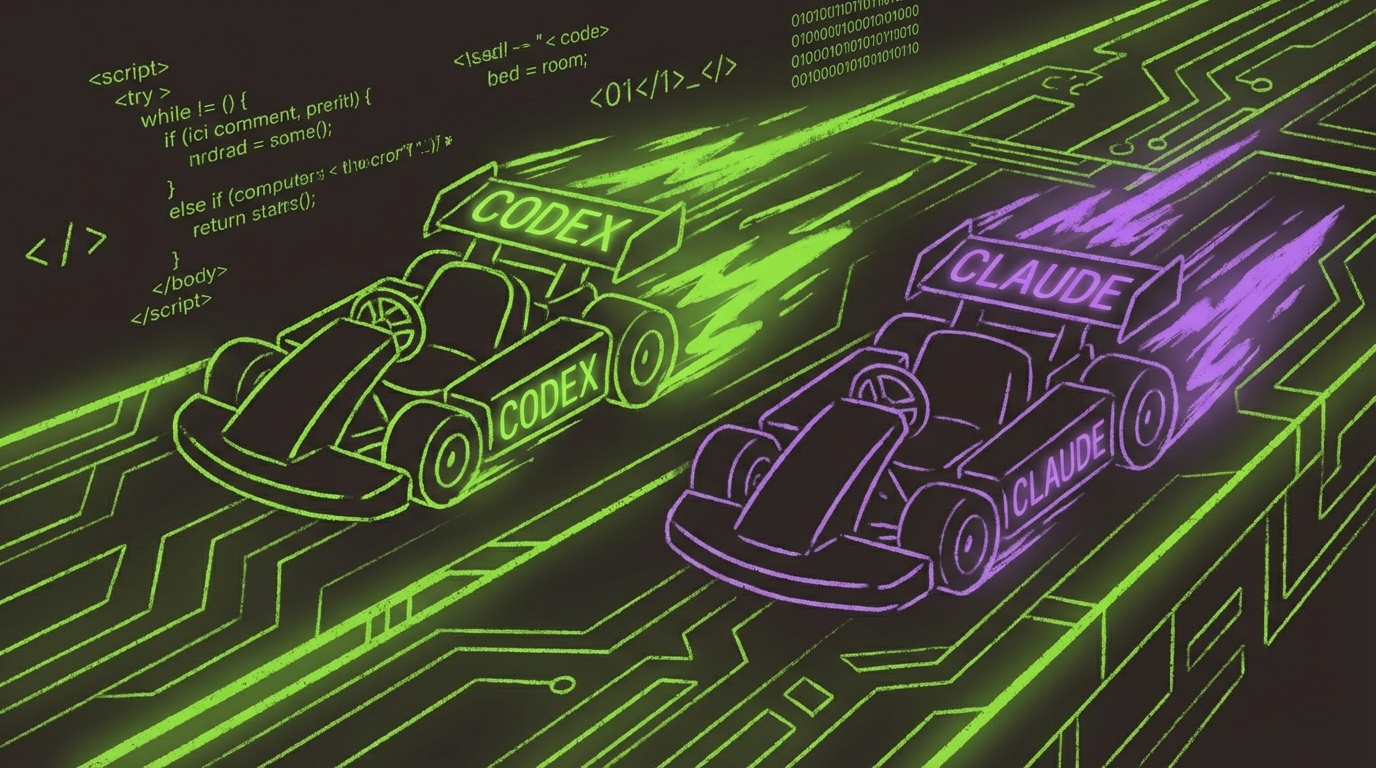
Codex vs Claude Code: Subagents, Benchmarks & the Real ... - Morph16 hours ago ... Build CI-like pipelines around your agent workflows with fine-grained lifecycle control. Best For: Multi-Agent Orchestration. If you want to architect a ...morphllm.com

Claude Code's Agent Teams enable coordinated multi-agent orchestration with dedicated context windows per task, shared task lists with dependency tracking, and direct inter-agent messaging—differentiating it from Codex's isolated manager-worker model. Claude Opus 4.7 now leads on SWE-bench Pro (64.3% vs 58.6%) and supports a 1M token context window versus Codex's 200K, though Claude uses approximately 4x more tokens per task due to more thorough reasoning. Both tools now ship production-ready subagent support: Codex allows up to 8 parallel workers in cloud sandboxes, while Claude Code has no hard agent cap but burns limits proportionally per spawned agent. For agentic coding workflows, Claude Code excels at complex architectural refactoring and long-running autonomous tasks through Agent Teams with /goal for persistent multi-day objectives and /ultrareview for parallel code review. Codex optimizes for speed and spec-driven parallel execution through its manager-worker pattern and Memories MCP server for cross-session context. Token consumption differences matter significantly for cost: using Claude Sonnet 4.6 for worker agents and Opus 4.7 only for lead agents can substantially reduce expenses on multi-agent workloads. Both platforms now include effort levels, persistent goals, cross-session memories, and plugin ecosystems with hooks, with Claude Code accounting for approximately 10% of all public GitHub commits (~326K daily as of June 2026).
sickn33/antigravity-awesome-skills - GitHub24 hours ago ... Installable GitHub library of 1500+ agentic skills for Claude Code, Cursor, Codex CLI, Gemini CLI, Antigravity, and more. Includes specialized plugins ...github.com
Antigravity Awesome Skills is an installable library of 1,527+ reusable SKILL.md playbooks designed for Claude Code, Cursor, Codex CLI, Gemini CLI, and other AI coding assistants. The library provides structured operating instructions to help agents perform recurring tasks with better context, stronger constraints, and clearer outputs—directly addressing the user's interest in efficient agentic coding workflows and advanced agent orchestration. The repository includes specialized plugins for focused domains (web apps, security, DevOps, QA, product design, data analytics, agent/MCP building), bundles for role-based skill discovery, and workflows for ordered execution of planning, coding, debugging, testing, and deployment tasks. For context window management, the library offers agent-overload-recovery guidance and selective installation options using --risk, --category, and --tags flags to keep the runtime skill set narrow and avoid context limits. Users can install via npx antigravity-awesome-skills with tool-specific flags for Claude Code, Cursor, Codex, or other platforms, and access curated starting points like the SaaS MVP bundle combining Essentials, Full-Stack Developer, and QA & Testing skills.