Agentic Coding
Top tech stories today across software, hardware, AI, and product launches. Senior engineer audience — skip rumour churn and pre-announcement leaks. Lead with shipping-now stories and what changed for builders.
← Zur aktuellen AusgabeSteer-or-dispatch mental model, OpenViking cuts token burn 63%, 83-tip pattern library lands
Steer vs dispatch agents
The tool you choose shapes the habit you build.
A new breakdown frames Claude Code and Codex as training opposite instincts—Claude teaches you to steer through iterative loops, Codex trains you to dispatch and demand proof [Source: Nate's Newsletter]. The real skill isn't getting output, it's knowing when that output is good enough to accept. The piece flags two failure modes to watch: theater (convincing conversation, no real understanding) and completion theater (runs that feel done but aren't). You get four reusable prompts including a steer-or-dispatch diagnostic and an "is it real?" audit.
Pick your habit deliberately—it'll follow you across every AI tool you touch.
OpenViking context database
Your scattered context files just got a unifying layer.
OpenViking is a new open-source context database that organizes agent memory, resources, and skills into a virtual filesystem with a viking:// protocol [Source: GitHub]. The system uses tiered loading—abstract, overview, details—to reduce what actually enters your context window. Benchmarks with Claude Code show 80% accuracy (up from 57%), 58% lower latency, and 63% fewer tokens burned. You also get visualized retrieval trajectories so you can debug what the agent actually grabbed.
If context rot has been your bottleneck, this is worth a weekend experiment.
83-tip best practices repo
Someone organized the full path from prompting to production patterns.
A new GitHub repository compiles 83 practical tips across prompting, planning, context management, and advanced workflows like command-agent-skill orchestration [Source: GitHub]. It covers the Research → Plan → Execute → Review → Ship workflow you've seen referenced in earlier updates, plus subagent isolation to prevent context pollution. The repo recommends keeping CLAUDE.md under 200 lines, using /compact mid-task, and running /rewind when attempts fail. Tips like /loop for recurring tasks and cross-model workflows for code review round it out.
Bookmark this one before your next refactor sprint.
AI-generated test review trap
Reviewing AI code is now harder than writing it yourself.
A six-month retrospective on Claude Code for testing reveals the real bottleneck: reconstructing mental models at the speed AI produces them [Source: Dev.to]. The author's pipeline has Claude draft test plans from Jira tickets, then convert them to Postman and Cypress—but only after manual validation catches plausible-but-wrong assertions. The insight: AI amplifies your existing engineering judgment. Without the skill to spot subtle bugs, high-volume output becomes dangerous.
Speed up your review muscle before you speed up generation.
 shanraisshan/claude-code-best-practice: from vibe coding to agentic ...19 hours ago ... ... Workflows · Advanced · Git / PR · Debugging · Utilities · Daily. Community. □ Prompting (3). Tip, Source. challenge Claude — "grill me on these changes and don ...github.com
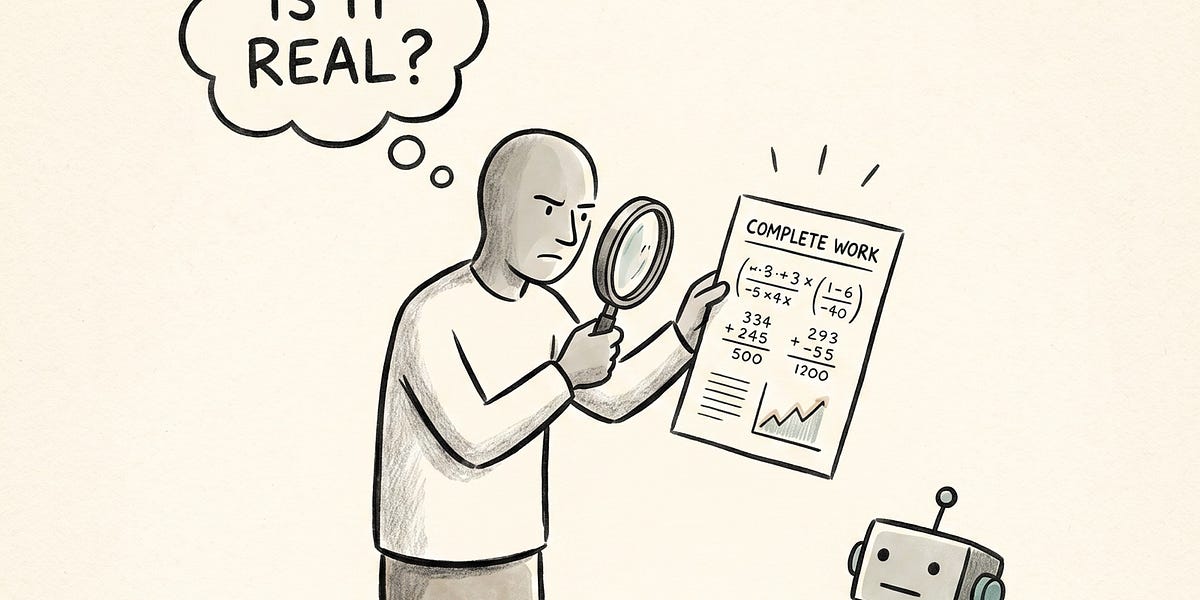 Claude Code vs Codex: Steer or Dispatch Your AI Agents16 hours ago ... Codex teaches you to dispatch them. That sounds like a workflow note. It is deeper than that. Use one long enough and it changes what you reach for when a ...natesnewsletter.substack.com
 OpenViking is an open-source context database designed ... - GitHub17 hours ago ... OpenViking unifies the management of context (memory, resources, and skills) ... Claude Code auto-memory, 57.21%, 49.1s, 353,306,422. Claude Code + OpenViking ...github.com
 Six Months of AI Writing My Tests: What Got Better, What Got Worse17 hours ago ... My testing workflow became a pipeline · Claude Code reads the Jira ticket and the actual application code, then drafts a manual testing plan in markdown. · From ...dev.to