Fintech · Industry brief
Top three stories shaping Fintech today, written for someone who already works in the industry: regulation, M&A, new entrants, notable filings, and any precedent worth pulling. Cite the trade publication (e.g. trade press, government source, court docket) directly so I can follow up.
← Zur aktuellen AusgabeSEC clears zero-cash brokers, banking agencies soften fintech rules, cross-border payments scale
SEC zero-cash balance relief
The SEC just cleared a new brokerage model that strips cash from the broker's books.
On September 17, the SEC Division of Trading and Markets issued no-action letters to eToro USA Securities and Alpaca Securities permitting "zero cash balance" accounts where customer funds sit with external banks or money services businesses instead [Quelle: Freewritings Law]. The relief specifies net capital minimums and conditions tailored to each firm's role—eToro as an introducing broker, Alpaca as a carrying firm. This removes a structural barrier to lighter-weight brokerage infrastructure.
Expect more brokers to file for similar relief now that precedent exists.
Banking agencies embrace fintech partnerships
Regulators are finally making it easier to partner with fintechs.
On September 11, the Federal Reserve, FDIC, OCC, and NCUA released proposed guidance replacing their 2023 third-party risk framework with a risk-focused approach that explicitly welcomes newer fintechs without long track records [Quelle: JDSupra]. The shift abandons "critical activities" prescriptive definitions in favor of "higher-risk" relationship assessments, loosens inventory requirements, and permits co-ventures and standards-body governance. Comments close November 16. However, banks remain liable for third-party failures, and the Agencies signaled intent to enforce directly against fintech service providers for critical systems breaches.
The framework is permissive on entry, strict on failure.
IPID raises $16M for payments intelligence
Cross-border payments just got a new layer of validation.
Singapore fintech IPID closed a $16 million Series A led by Foundation Capital and backed by Citi and HSBC, focusing on payment validation and account identification across 50+ countries [Quelle: DealStreetAsia]. Founded by former SWIFT employees in 2021, the firm reported $0.31 million revenue in 2024 (up from $0.04 million in 2023) and plans to expand into US payment rails and digital assets. Capital deployment targets global network expansion and US/Europe growth.
Watch for announcements on US payment rail infrastructure partnerships within the next two quarters.
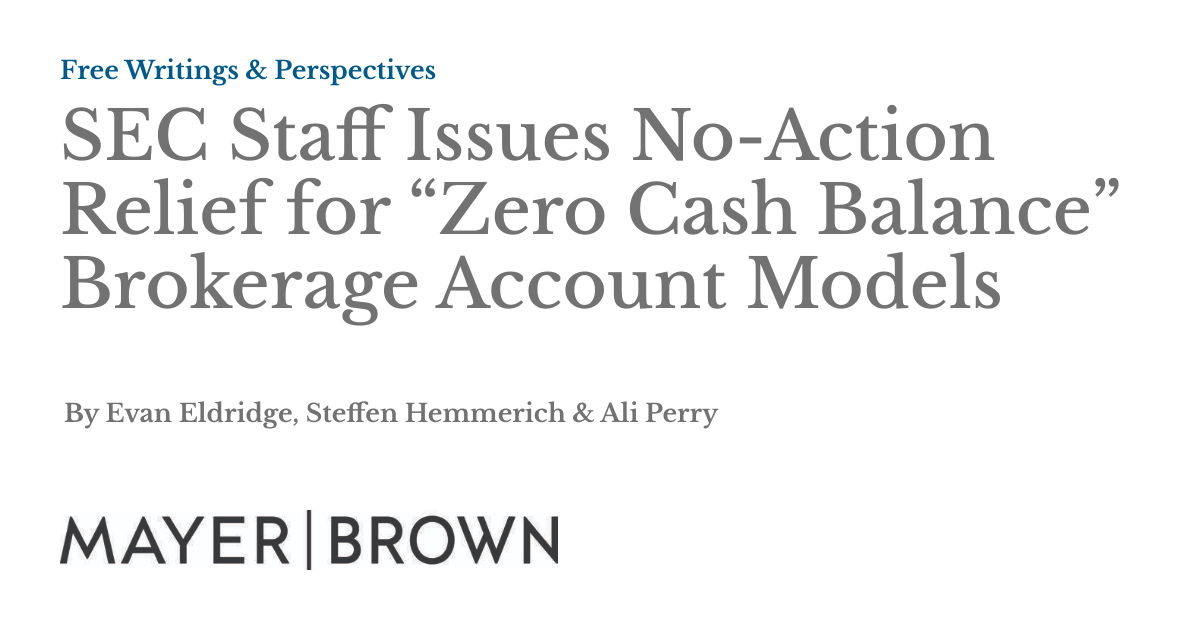 SEC Staff Issues No-Action Relief for “Zero Cash Balance ...11 hours ago ... The Staff stated that it will not recommend enforcement action against eToro ... The letters are notable as they provide a regulatory pathway for fintech ...freewritings.law
 Banking Agencies Issue Proposed Updated Third-Party Risk ...7 hours ago ... The Proposed Guidance signals a greater acceptance of bank-fintech partnerships and a focus on addressing material financial risks and violations of laws and ...jdsupra.com
 SG fintech startup IPID raises $16m in Series A funding9 hours ago ... In a statement, IPID said existing investors QED Investors, Monk's Hill Ventures and Quona Capital also took part in the funding round. Other institutional ...dealstreetasia.com