Fintech · Industry brief
Top three stories shaping Fintech today, written for someone who already works in the industry: regulation, M&A, new entrants, notable filings, and any precedent worth pulling. Cite the trade publication (e.g. trade press, government source, court docket) directly so I can follow up.
← Zur aktuellen AusgabeWise stumbles on trust charter; prediction markets court fight escalates
Wise OCC rejection
Wise's U.S. banking ambitions hit a regulatory wall.
The OCC denied the British fintech's national trust bank charter application, citing persistent anti-money laundering deficiencies and leadership gaps in financial crime management [Source: Banking Dive]. The rejection follows a July 2025 multi-state consent order that cost Wise $4.2 million in penalties over BSA and AML failures. The company says it has since rebuilt its compliance operation—roughly one-third of its workforce now handles financial crime prevention—and plans to resubmit under the Genius Act framework.
Reputational damage may prove harder to fix than headcount.
Prediction markets limbo
Federal and state regulators are fighting over who controls prediction markets.
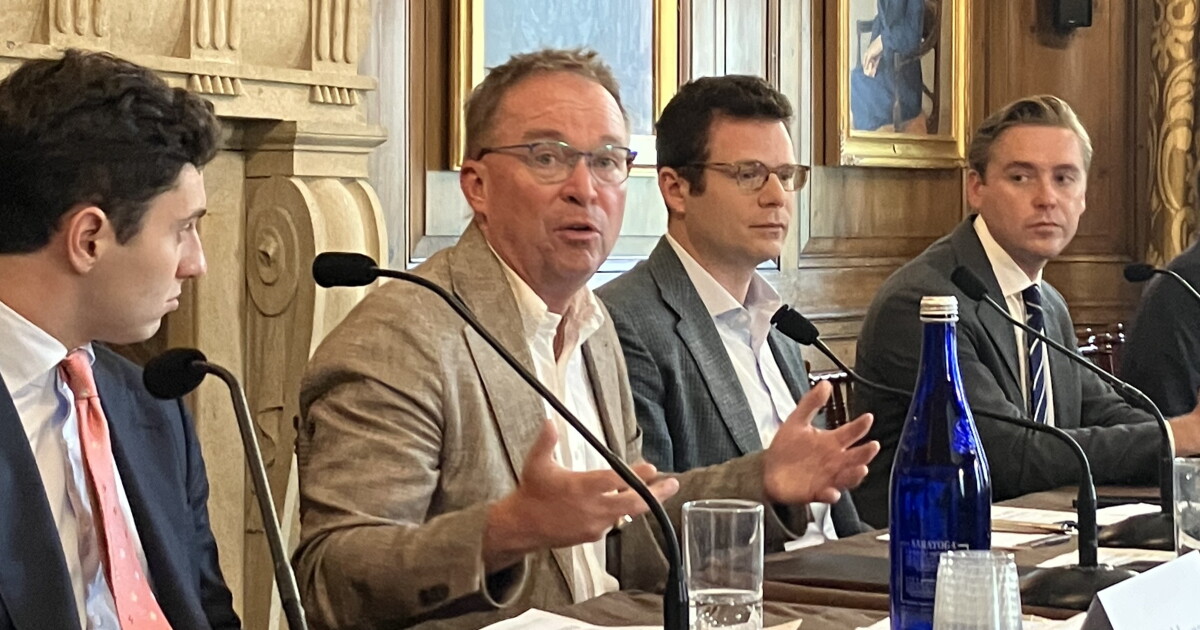
A CFR roundtable this week exposed the schism: the CFTC claims exclusive jurisdiction over prediction platforms, while state gambling regulators are filing lawsuits—leaving fintechs like Kalshi facing contradictory court orders, as recently happened in Michigan [Source: American Banker]. JPMorgan, Goldman Sachs, Coinbase, and Robinhood are all circling the space; Coinbase acquired The Clearing Company last December, and Robinhood took a 90% stake in MIAXdx in January. Former CFTC acting director Mick Mulvaney warned that Congress is unlikely to clarify the rules legislatively—meaning courts, possibly the Supreme Court, will ultimately draw the line.
The arbitrage window may not stay open long.
Compliance cost squeeze
Bank and fintech compliance bills are rising faster than revenue.
Tighter anti-money laundering, financial crime, and regulatory scrutiny are forcing institutions to divert engineering and product talent to risk and legal functions. Wise's example—dedicating a third of its headcount to AML—illustrates the drag; smaller community banks and fintechs lack the scale to absorb these costs without raising fees or cutting services. Rising regulatory penalties and multi-state consent orders are now table stakes for any U.S. expansion.
Survival hinges on either specialized compliance tooling or accepting lower margins than incumbents.
 OCC rejects Wise's trust charter application over 'deficiencies'8 hours ago ... Filed Under: Regulations & Policy, Fintech. Banking Dive news delivered to ... GOP lawmakers press Fed's Bowman for faster bank M&A approvals. By Caitlin ...bankingdive.com
 Risk hedge or gambling? Prediction market debate persists15 hours ago ... ... M&A · Small Business · Earnings · Bank Industry Data · Asset Securitization. Policy ... Fintech regulations. Risk hedge or gambling? Prediction market debate ...americanbanker.com