Cybersecurity · Industry brief
Top three stories shaping Cybersecurity today, written for someone who already works in the industry: regulation, M&A, new entrants, notable filings, and any precedent worth pulling. Cite the trade publication (e.g. trade press, government source, court docket) directly so I can follow up.
← Zur aktuellen AusgabeAI-security dominates Q3 funding; consolidation outpaces startups; quantum moves forward
Q3 funding surge, AI concentration
AI-security startups are eating the funding pie.
Cybersecurity vendors raised $6.8 billion globally in Q3 2026—a 50% jump from Q2—but deal counts fell at every stage, concentrating capital among fewer, larger rounds [Quelle: BeamStart]. At least 18 firms at the AI-security intersection closed rounds exceeding $100 million, led by Keyfactor's $1 billion growth raise from Summit Partners, Island's $400 million at $6.4 billion valuation, and Cyera's $400 million from Goldman Sachs at $12 billion valuation.
Fewer, bigger checks mean venture capital is betting the market consolidates around AI-native platforms.
M&A accelerates; exits bottleneck continues
Acquirers are moving faster than founders can exit via IPO.
Visa paid $2.4 billion for BioCatch, and Cyera closed a roughly $1 billion acquisition of Oasis Security in the same quarter [Quelle: Value Add VC]. Aura's reverse-merger listing with Qoria marked the only sizable venture-backed public debut, underscoring how exit-starved the security sector remains outside M&A. Large players are consolidating identity and cloud-native workloads faster than small teams can adapt.
Startups without strong AI capabilities now face pressure to partner or fold.
Network security: consolidation, cloud, compliance
The network security market is collapsing around five mega-vendors.
Palo Alto Networks (15.49% share), Fortinet (14.81%), Cisco (10.51%), Check Point, and Zscaler collectively hold 55% of network security revenue [Quelle: GMInsights]. Cloud-native deployment is growing at 16.02% CAGR while on-premises share collapses from 42% to projected 20% by 2035. EU NIS2 Directive penalties up to $11.2 million are now driving structured procurement cycles, especially in critical infrastructure.
Regulatory compliance has become the primary procurement lever; AI-augmented threat detection is displacing signature-based defense.
WAAP vendors map the buyer landscape
Web application protection just got its Forrester stamp.
Link11 appeared in Forrester's inaugural Q3 2026 Web Application Protection Platforms Landscape, which segments vendors by geography, industry, deployment model, and size [Quelle: Link11]. The category bundles web application firewall, API security, DDoS, and bot management—now including AI-driven traffic management and intellectual property protection against uncontrolled LLM scraping.
Buyers now have a formal buyer's guide; vendors without Forrester positioning will face procurement headwinds through Q4.
 Cybersecurity Funding Surges to $6.8 Billion in Q3 Driven by AI ...15 hours ago ... Consolidation and Future Growth Ahead. Acquisitions also picked up pace including a 2.4 billion dollar purchase by Visa and a roughly 1 billion dollar deal by ...beamstart.com
 Cybersecurity Startups Pull In $6.8B in Q3 - FUNDING - Value Add VC12 hours ago ... Aura's reverse-merger listing with the already-public Qoria was the quarter's only sizable venture-backed public debut, a thin signal for exits outside M&A. The ...valueaddvc.com
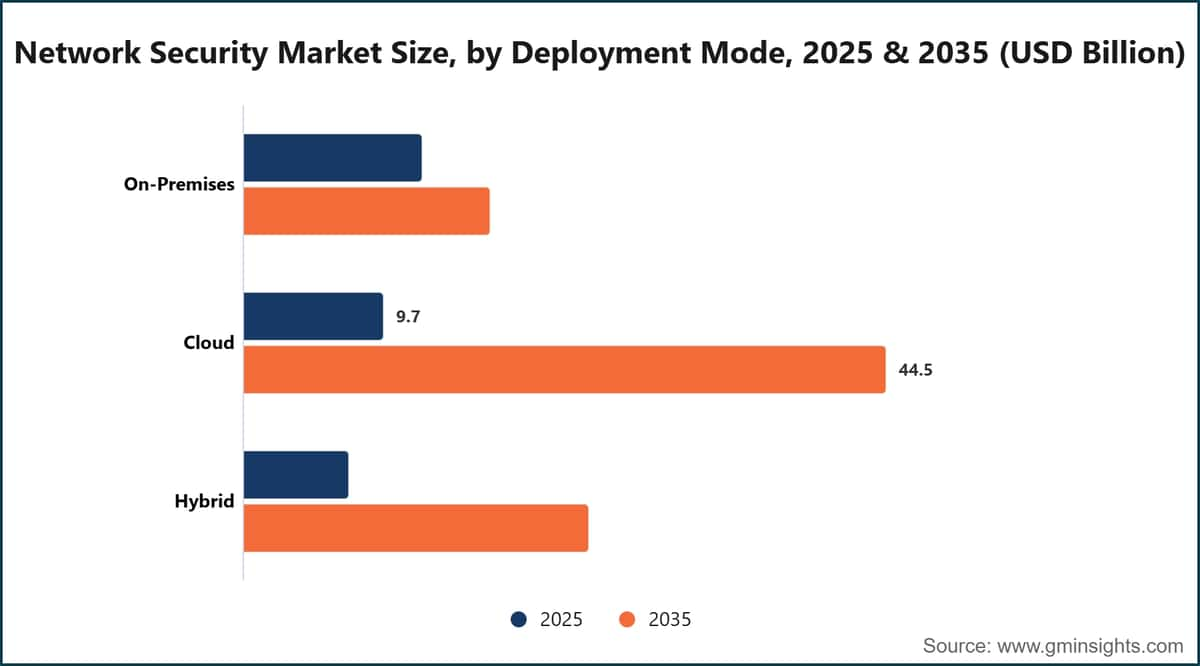 Network Security Market Size, Forecasts Report 2026-20353 hours ago ... The network security market share landscape is moderately concentrated, with the five largest providers collectively holding 55.02% of market revenue in 2025.gminsights.com
 Link11 Included in Forrester Web Application Protection Report13 hours ago ... ... vendor in Forrester's “The Web Application Protection Platforms Landscape, Q3 2026.” The report provides security professionals with an overview of vendors ...link11.com