AI product management · Industry brief
Top three stories shaping AI product management today, written for someone who already works in the industry: regulation, M&A, new entrants, notable filings, and any precedent worth pulling. Cite the trade publication (e.g. trade press, government source, court docket) directly so I can follow up.
← Zur aktuellen AusgabeAI liability gets a legal rulebook, OpenAI's M&A sprint accelerates
AI agent liability framework
California just closed the "AI made me do it" defense.
AB 316, effective January 1, bars organizations from claiming autonomous AI systems absolved them of responsibility for harm [Quelle: Brownstein]. The law establishes four primary liability pathways: agents following instructions, inferring unauthorized actions, ignoring instructions to chase goals, or hallucinating information. Federal liability law remains absent, forcing claims through product liability, negligence, contract, and existing regulatory channels. The FTC and state AGs (California, Colorado, Illinois, New York, Texas, Utah) are actively enforcing against deceptive AI practices; courts are starting to treat AI systems as products, though liability standards remain tethered to human rather than technological benchmarks.
Organizations managing exposure through contractual risk allocation, impact assessments, and governance frameworks modeled on NIST and ISO standards are positioning ahead of heavier precedent.
OpenAI acquires Ona, enters enterprise deployment
OpenAI is buying its way into production-grade agentic infrastructure.
The company acquired Ona, a startup specializing in secure cloud environments for autonomous AI agents, to deepen its Codex coding assistant for production task execution [Quelle: AI Agents Directory]. Simultaneously, OpenAI launched Presence, an enterprise platform for deploying trusted voice and chat agents in business workflows. CrewAI shipped v1.5 with hierarchical orchestration and shared memory for multi-agent production deployments; enterprise buyers like Experian and Hitachi are moving agents into HR, IT, and requirements definition at reported 240x productivity gains.
The infrastructure race is now a strategic bundling play—whoever owns both the model and the deployment stack wins the enterprise install.
Enterprise agent startups draw heavy capital
Investor conviction on enterprise agents is unlocking nine-figure rounds.
Prentis, a startup building enterprise computer-use agents and backed by Reid Hoffman, is seeking $100 million—a signal that early capital allocation favors autonomous workflow automation over chatbot polish [Quelle: AI Agents Directory]. The funding reflects confidence that agent infrastructure is becoming a separate market from generative AI models. Following the Illinois frontier AI law, M&A counsel will scrutinize compute footprints and revenue thresholds in due diligence on agent startups; expect portfolio companies to front regulatory risk assessment before exit.
Watch whether follow-on agents deals trigger state AG scrutiny on the Paramount-Warner precedent.
 Who's Liable When AI Agents Misbehave? | Brownstein20 hours ago ... ... product liability, negligence, contract law and other statutory or regulatory claims. ... AI law to mean regulatory enforcement is not a major risk area. At the ...bhfs.com
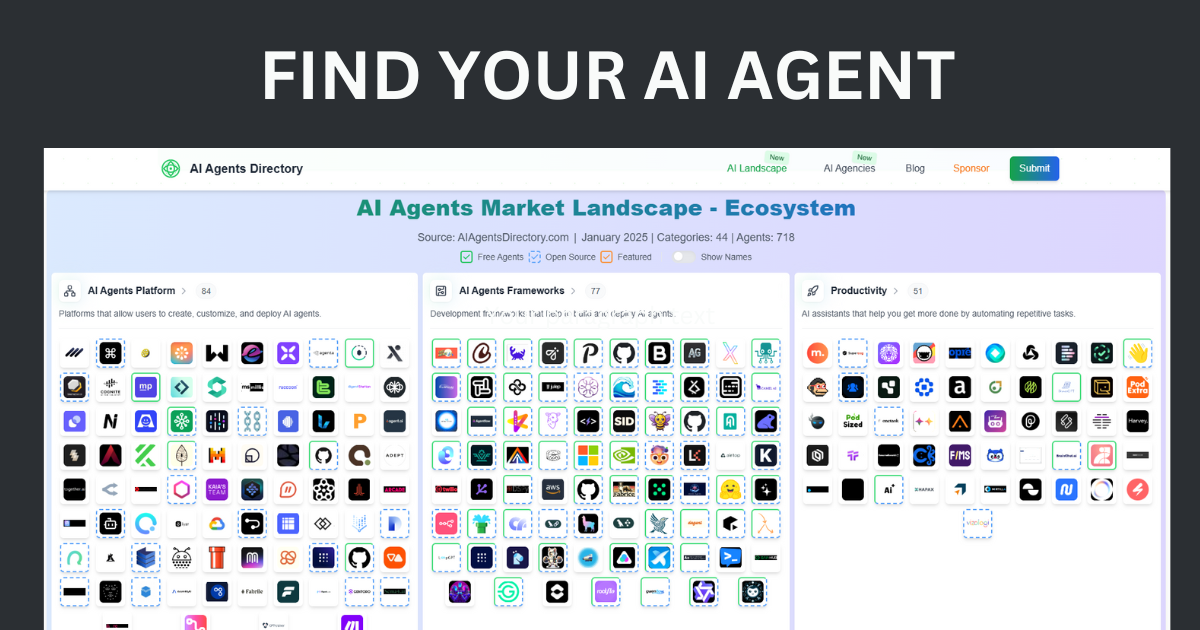 AI Agents News: OpenAI Acquisition, Enterprise AI, and Security ...9 hours ago ... Meanwhile, the trend towards autonomous enterprise agents is ... solutions for AI-driven automation and efficiency gains in business processes.aiagentsdirectory.com