AI product management · Industry brief
Top three stories shaping AI product management today, written for someone who already works in the industry: regulation, M&A, new entrants, notable filings, and any precedent worth pulling. Cite the trade publication (e.g. trade press, government source, court docket) directly so I can follow up.
← Zur aktuellen AusgabeEU DSA chaos, antitrust data licensing, SEC AI-washing crackdown
EU DSA ChatGPT designation
Brussels just created a regulatory fracture that will haunt AI companies for years.
On August 31, the European Commission designated ChatGPT a "very large online search engine" under the Digital Services Act, exposing a fundamental mismatch in EU digital regulation [Quelle: Truth on the Market]. The classification subjects OpenAI to DSA obligations that do not apply to rival AI providers like Anthropic, tilting the competitive field. Worse: the Commission took a wait-and-see stance on the Digital Markets Act just months earlier, refusing to expand "core platform services" to include standalone AI. Italian regulators disagreed on whether AI agents with optional search qualify as intermediary services at all—the same taxonomic problem under the same law.
Expect a compliance proxy war as vendors race to avoid the "search engine" label.
Antitrust data licensing risk
Copyright licensing is becoming an antitrust battlefield for AI vendors.
At an American Bar Association panel on September 10, legal scholars flagged a critical risk: mandatory licensing agreements designed to appease copyright holders could entrench incumbent AI firms by raising barriers to entry for new competitors [Quelle: Penn State]. The Department of Justice has already signaled concern in its statement of interest in the New York Times–OpenAI litigation. Exclusivity clauses, most-favored-nation agreements, and collective licensing arrangements now shape who can train on what data—and who gets excluded from competitive markets.
Watch the Next Gen litigation for how DOJ applies antitrust law to AI training pipelines.
SEC/CFTC AI-washing crackdown
The regulators are no longer debating—they are prosecuting.
The SEC and CFTC have elevated AI-related misconduct to a standalone enforcement priority, with the SEC's Cyber and Emerging Technologies Unit investigating "AI washing"—false claims about AI capabilities [Quelle: Government Enforcement Report]. An April 2025 parallel civil and criminal case against a startup CEO who raised $42 million on fraudulent AI claims proved this is not theater. More urgent: autonomous AI trading agents like Robinhood's Agentic Trading platform have exposed a classification gap—nobody knows if autonomous systems trigger investment-adviser or broker-dealer rules, or how antifraud provisions apply when no human formed intent. The CFTC launched an Innovation Task Force in early 2026 to close the gap.
Expect guidance on autonomous systems and intent within the next quarter.
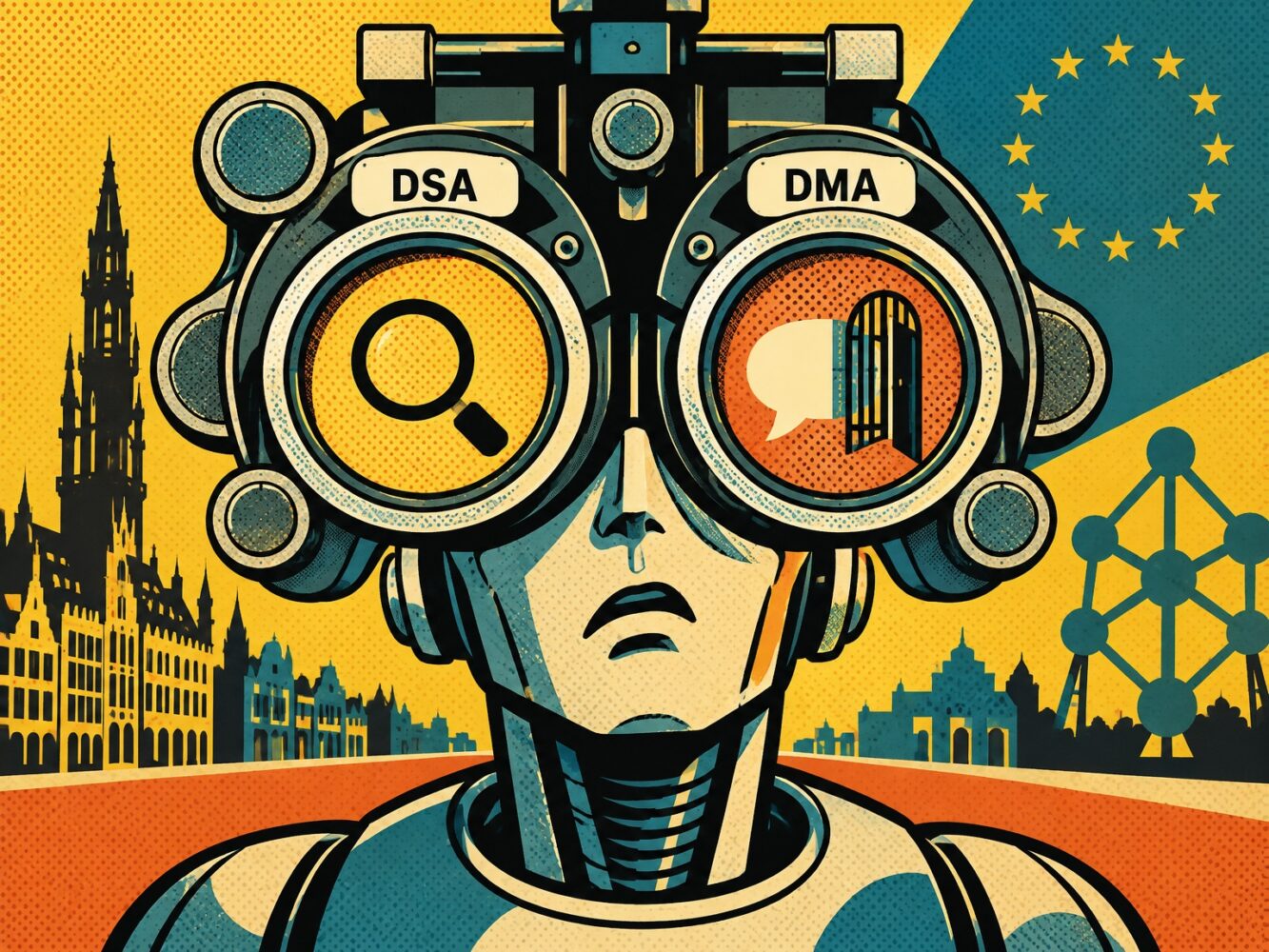 One AI, Two Rulebooks: Brussels' ChatGPT Conundrum12 hours ago ... Tags: Administrative Law, AI & Big Data, DMA, EU, International Antitrust, Internet Governance, Platforms. Truth on the Market. Back to top. Exit mobile ...truthonthemarket.com
 Associate Dean Daryl Lim discusses antitrust and generative AI ...6 hours ago ... ... artificial intelligence platforms. ... The 60-minute webinar was sponsored by the American Bar Association's Antitrust Law Section and co-sponsored by Civil ...dickinsonlaw.psu.edu
 New Rules, New Risks: Securities and Commodities Enforcement ...24 hours ago ... Looking ahead, one of the most consequential questions involves AI agents that autonomously execute trades. The launch of Robinhood's Agentic Trading platform ...governmentenforcementreport.com