Real estate · Industry brief
Top three stories shaping Real estate today, written for someone who already works in the industry: regulation, M&A, new entrants, notable filings, and any precedent worth pulling. Cite the trade publication (e.g. trade press, government source, court docket) directly so I can follow up.
← See today's latestRemedies return, state attorneys general flex, health care M&A compliance explodes
Trump-era remedies & HSR uncertainty
Negotiated remedies are back in antitrust playbooks.
The Trump administration's FTC and DOJ are now accepting structural divestitures proposed early in deal discussions, as seen in the 365 Retail Markets/Cantaloupe and Taiheiyo/CalPortland/Vulcan consent orders [Quelle: McDermott LLP]. But federal clearance no longer closes deals—state attorneys general and private plaintiffs are blocking integration despite DOJ and FCC signs-off, as the Nexstar/TEGNA and Paramount/Warner Brothers cases show. The Biden-era HSR expansion has been vacated; agencies plan new rulemaking by year-end, leaving late-2026 signings in limbo.
Deal counsel should model six-month HSR timelines as base case.
State mini-HSR rules tighten PE deal access
Eight states just weaponized health care transaction oversight against private equity.
California's AB 1415 mandates 90-day notice before asset sales; its SB 25 (effective 2027) routes HSR filings to the California Attorney General with $25,000 daily penalties for lapses [Quelle: Bass, Berry & Sims]. Connecticut blocks hospital sale-leaseback deals of main campuses unless in financial distress and demands annual PE attestations; Illinois expanded its antitrust act to flag PE acquisitions above $10 million in annual state revenue. Maine imposes 180-day review for PE-involved control shifts; Massachusetts classifies real property sale-leasebacks and equity investor transactions as material changes requiring 60-day notice. Rhode Island, Vermont, and Washington follow suit with daily penalties up to $200.
Real estate shops must add state health-care counsel to deal teams now.
European hotel deals shift upscale, volume drops
Europe's hotel market is culling weak assets and repricing quality.
H1 2026 transaction volume fell to €9.4 billion—down 10% year-on-year—but average price per hotel jumped 12% to €36.7 million and per-room pricing hit a decade high of €268,000, driven by real estate investment companies net buying €2.1 billion (43% of volume) while private equity sold €1.3 billion [Quelle: HVS]. The UK accounted for 32% of European volume with London alone at 22%; upscale hotels dominated at €4.3 billion (46% of volume). Deals like Riu's €334 million Westminster Curio London acquisition and Covivio's €217 million four-hotel Milan buy signal that capital is consolidating around trophy addresses and strong operators.
Secondary stock will face cap-rate pressure as capital crowds the top tier.
Korea's RSQUARE scales CRE analytics across Asia
Korea's commercial real estate data engine is eating advisory margins across Asia.
RSQUARE's investment advisory division grew 2.3x year-on-year, backed by a proprietary database spanning 400,000+ buildings across South Korea, Vietnam, and Singapore, now serving Korea's National Pension Service, GIC, Blackstone, DWS, and PAG [Quelle: RSQUARE]. Recent advisory mandates include the KRW 432 billion Centerpoint Gwanghwamun Seoul office sale and the KRW 31.5 billion Sejong Telecom Bundang data-center exit. The model matches buyers to asset types—income properties, conversion opportunities, or specialized-use conversions—positioning RSQUARE as a differentiated competitor against CBRE and Savills in the Korean market.
Watch whether RSQUARE's playbook scales to Southeast Asia next.
 US M&A activity: Remedies return & HSR form reverts9 hours ago ... McDermott lawyers summarize US antitrust M&A activity for Q2 2026, including returning remedies, state resilience, and HSR form changes under Trump 2.0.mcdermottlaw.com
Korea's Commercial Real Estate "Data Giant" Attracts NPS, GIC and ...7 hours ago ... ... investor matching and transaction structuring to asset operation and management. ... Real Estate · News Releases in Similar Topics. Contact PR ...prnewswire.com
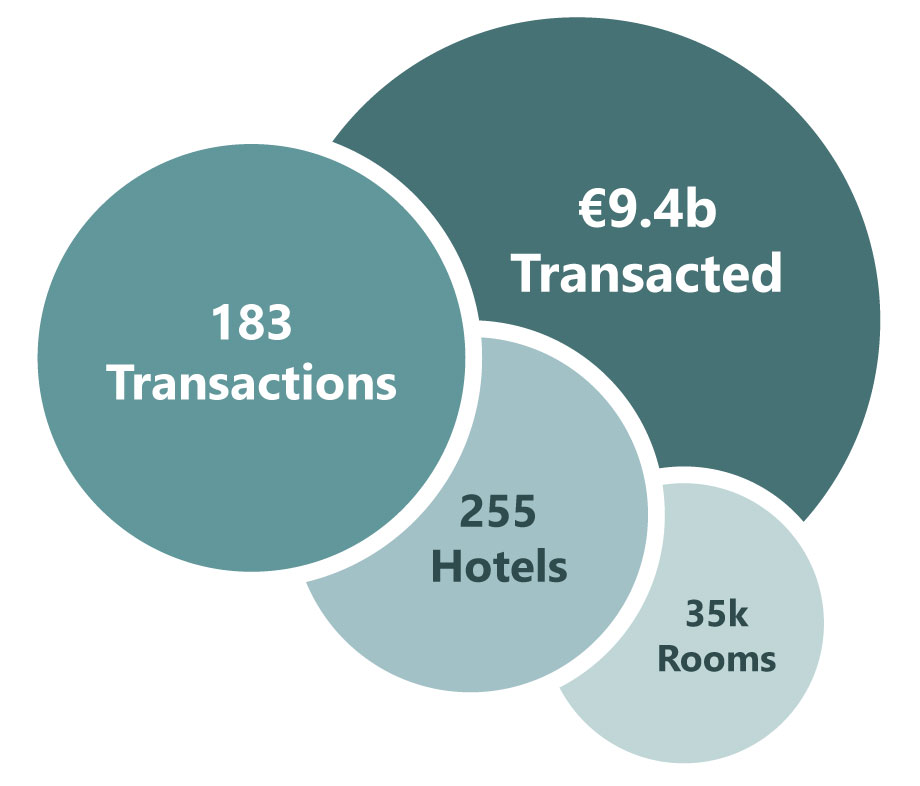 H1 2026 European Hotel Transactions - HVS22 hours ago ... Real Estate Investment Companies acquired €4.1 billion over the semester, 43 ... News Room · News RSS Feed. HVS - © Copyright 2026. All Rights Reserved by ...hvs.com
 Session's Out! Summary of State Health Care Transaction ...19 hours ago ... ... real estate investment trusts (REITs). Transaction parties will need to ... real property sale-leaseback transactions — are now covered. Conversions of ...bassberry.com