Legal tech · Industry brief
Top three stories shaping Legal tech today, written for someone who already works in the industry: regulation, M&A, new entrants, notable filings, and any precedent worth pulling. Cite the trade publication (e.g. trade press, government source, court docket) directly so I can follow up.
← See today's latestAI hallucinations spike, SaaS terms reshape, benchmarks lag
AI hallucination surge continues
Fabricated legal citations are now a category crisis, not edge cases.
Academic research confirms what practitioners already know: measured hallucination rates across legal AI tools sit between 17% and 33% for grounded research tasks, with AI-drafted court filings jumping from roughly 200 cases in September 2025 to over 2,000 by this month [Source: Taylor & Francis]. The problem is architectural—most legal AI vendors layer prompts over general-purpose models rather than training on legal data, leaving the underlying models guessing at case law and statute citations. FTC enforcement from the September filing signals regulators will now treat unsubstantiated accuracy claims as deceptive.
Expect liability clauses in AI legal service agreements to narrow sharply.
SaaS AI terms tighten around liability
Drafting AI terms of service just got legally riskier for vendors.
As hallucination liability becomes a centerpiece of legal tech due diligence, SaaS founders face pressure to rewrite output ownership, data handling, and prohibited-use clauses with precision [Source: Traverse Legal]. The tension is acute: vendors want to disclaim liability for AI errors, but customers—particularly law firms using outputs in client work—demand warranties. Privacy terms and user data provisions now routinely include language restricting model training and requiring compliance with attorney-client privilege. Many SaaS agreements now carve out explicit liability caps tied to annual contract value rather than unlimited indemnity.
Watch whether incumbents bundle liability insurance into enterprise licensing.
Platform selection now hinges on accuracy benchmarks
Buyers are finally benchmarking legal AI on measurable accuracy, not feature lists.
Selection criteria have shifted from embedded workflow and integration breadth to verifiable hallucination rates and citation grounding [Source: Arize AI]. Real benchmarking studies now compare threshold tuning and detection methods across models—threshold settings can shift hallucination detection accuracy by 20–30 percentage points, meaning configuration matters as much as the underlying model. Teams deploying legal AI internally are demanding white-box accuracy reports before contract signature, a shift from the earlier playbook where vendors shipped opaque black-box tools.
Accuracy transparency just became table stakes for Series B legal tech.
 Drafting AI Terms of Service: A Legal Guide for SaaS Founders14 hours ago ... Limitations of Liability and Accuracy Disclaimers (AI Hallucinations). AI ... legal issues for AI startups · legal issues fro brand owners · legal issues in ...traverselegal.com
 Explanation Transparency and Trust Perception After Generative AI ...17 hours ago ... Numerous studies have primarily attempted to mitigate AI hallucination issues ... Recent legal scholarship argues that hallucinations are not simply accuracy ...tandfonline.com
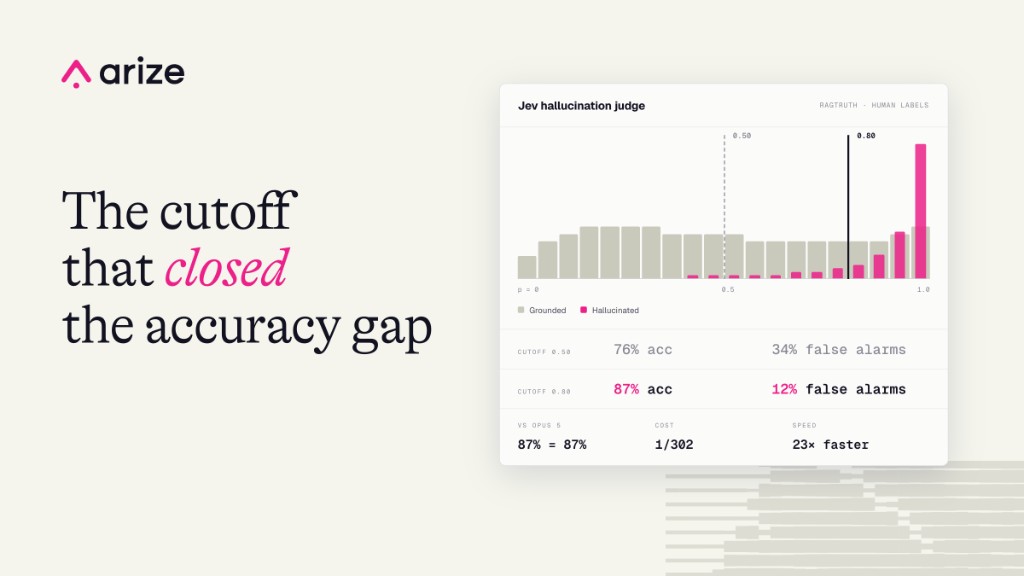 Jev vs LLM-as-a-Judge: Accuracy and Cost Benchmarks | Arize AI20 hours ago ... Split Jev's output by what the humans said and the problem is obvious. Hallucinated responses pile up near 1.0, with a median of 0.96. Grounded responses spread ...arize.com